How Do Scientists Estimate How Far Humpback Whale Sounds Travel Underwater?
Humpback whales produce a variety of underwater sounds, including the complex songs that have attracted scientific interest around the world. But when a whale sings beneath the ocean's surface, how far can its sound travel Can another whale detect it from a great distance, and how can scientists estimate the distance at which a hydrophone can record it?
These questions are more complicated than they may appear. Underwater sound does not travel through the ocean in exactly the same way under every condition. Its propagation depends on factors such as sound frequency, the characteristics of the water, the shape of the seabed, background noise, and the sensitivity of the recording equipment.
Scientists investigate these factors to estimate how far whale sounds may remain detectable. Understanding this process helps researchers interpret acoustic recordings more accurately and explains why hearing a whale does not necessarily reveal its exact location.
For visitors interested in humpback whales in Samaná Bay, Dominican Republic, this science provides another perspective on the animals that gather in the region during the breeding season.
Can Humpback Whale Sounds Travel Long Distances Underwater?
Yes. Humpback whale sounds can travel considerable distances underwater under suitable conditions. However, there is no single distance that applies to every song or call.
Some sounds may be detectable only relatively close to their source, while others may remain detectable farther away. The result depends on the sound's characteristics, how much energy reaches the surrounding water, environmental conditions, and the sensitivity of the receiver.
A whale song recorded by a hydrophone does not automatically tell scientists how far the sound has traveled. Researchers need additional information about the source, the underwater environment, and the recording system to estimate propagation distance.
It is also important to distinguish between two questions:
- How far can a sound travel? This concerns the physical propagation of acoustic energy through the water.
- How far can a sound be detected? This concerns whether a particular receiver can distinguish the sound from background noise.
These distances are not necessarily the same. Acoustic energy may continue propagating after a sound becomes too weak to distinguish reliably from the surrounding noise.
1. Measuring the Original Sound
One of the first challenges is understanding the sound produced by the whale.
Researchers may analyze a recording to estimate characteristics such as frequency, duration, and received sound level. When suitable measurements and supporting information are available, they may also estimate the sound level near the source.
Source level is important because two vocalizations can differ in their initial acoustic energy. A stronger sound may remain detectable farther away than a weaker sound under otherwise similar conditions.
However, a hydrophone recording provides the sound level at the receiver, not automatically the level at the whale. The sound has already traveled through the water and may have been affected by propagation losses.
To estimate the original source level, researchers need additional information, such as the distance between the whale and the hydrophone, the recording system's calibration, and an appropriate model of sound propagation.
Without that information, a recording alone may be insufficient to calculate how far the sound traveled.
2. Understanding How Sound Spreads Through Water
As sound travels away from its source, its energy spreads through the surrounding environment. This spreading generally reduces the sound level measured at increasing distances.
The amount of spreading depends partly on the acoustic environment. In a simplified open-water model, sound from a point source may spread approximately spherically over some distances. In other circumstances, boundaries and underwater conditions can make the spreading more complicated.
The seabed, the ocean surface, and the structure of the water can affect how acoustic energy travels. Sound may be reflected, refracted, absorbed, or redirected along different paths.
Scientists account for these effects when estimating propagation distance.
A simple spreading model can provide a useful starting point, but it should not be treated as an exact description of every real ocean environment. In shallow coastal areas, interactions with the seabed and surface may be especially important.
For this reason, researchers select models that are appropriate for the location, sound frequency, and environmental information available.
3. Why Sound Frequency Matters
Different frequencies can behave differently underwater.
Frequency describes how many cycles of a sound wave occur per second. It is measured in hertz (Hz).
The frequency content of a humpback whale vocalization can influence how it interacts with the water, seabed, and surface. Absorption and other propagation effects vary with frequency, so different components of the same song may not travel equally well.
For example, one part of a vocalization may remain detectable farther away than another because the components experience different propagation losses or because background noise masks them differently.
Scientists therefore often examine frequency-dependent sound levels instead of treating a whale song as a single uniform signal.
This approach can provide a more realistic understanding of which portions of a vocalization might be detected at different distances.
It also helps explain why a recording may preserve the broad structure of a whale song while losing some of its finer acoustic details.
4. Measuring Background Noise in the Ocean
Even when a whale sound reaches a hydrophone, it may be difficult to detect if other sounds are present.
The ocean contains background noise from waves, rainfall, vessels, marine organisms, and other natural or human-made sources. The amount and character of that noise can vary across locations and over time.
Scientists measure or estimate background noise to determine whether a whale vocalization would be distinguishable from its surroundings.
A sound that stands clearly above the background may be detected at a greater distance than a similar sound surrounded by strong noise. If background noise increases, the effective detection distance may decrease.
Researchers can compare the received signal with the noise level in relevant frequency bands. They may also consider the detection method and the level of confidence required before declaring that a vocalization is present.
This distinction matters because acoustic detection is not simply a matter of whether a sound physically exists. It is also a question of whether the available recording system can identify that sound reliably.
5. How Hydrophones Help Estimate Detection Distance
A hydrophone is an underwater microphone designed to capture sound in the water.
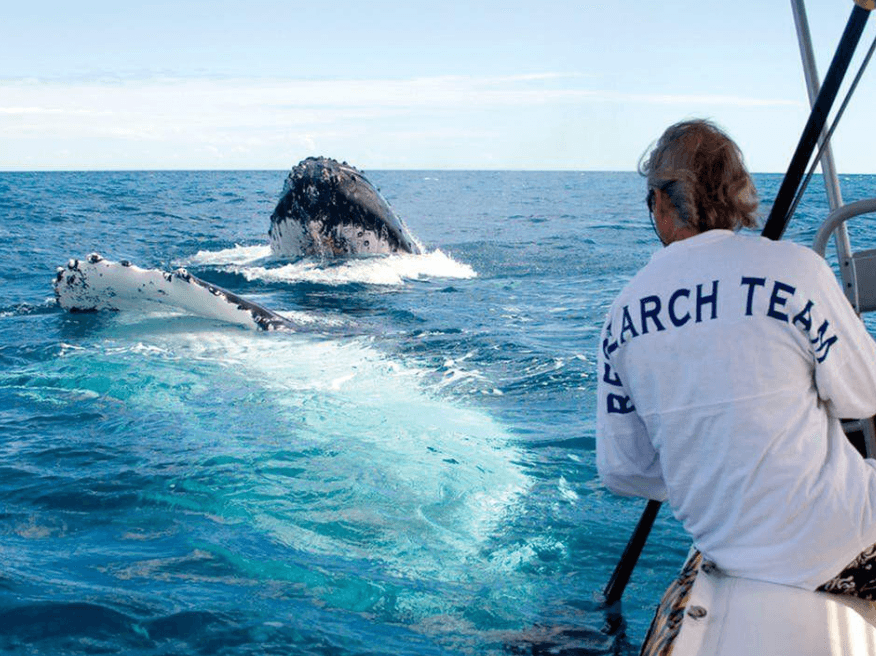
Researchers use hydrophones to record whale vocalizations and investigate how sound levels vary across different locations. Depending on the research design, equipment may be deployed from a research vessel, attached to an appropriate monitoring system, or installed as part of a longer-term acoustic project.
Hydrophones can provide information about the sounds received at particular locations. When several calibrated hydrophones are deployed at known positions, their recordings may help researchers compare how a vocalization reaches different receivers.
For example, if the same whale sound is recorded at multiple locations, scientists may examine differences in received level, timing, and acoustic quality.
However, comparing recordings requires care. Different hydrophones, recording settings, orientations, and background conditions can produce different results even when the sound source is unchanged.
Calibrated equipment and documented deployment information help researchers separate genuine propagation differences from differences introduced by the recording system.
6. Using the Signal-to-Noise Ratio
A useful concept in acoustic detection is the signal-to-noise ratio, commonly abbreviated as SNR.
It describes the strength of a signal relative to the background noise within a defined measurement framework. For sound levels expressed in decibels, the ratio can be represented as the signal level minus the noise level when both are measured consistently.
A higher signal-to-noise ratio generally makes a sound easier to distinguish from the background. A lower ratio can make identification more difficult.
Researchers may investigate how the signal-to-noise ratio changes with distance. As a whale sound propagates, its received level often decreases, while the background noise may remain similar or vary independently.
Eventually, the signal may become too difficult for a particular system or method to detect reliably.
There is no single universal SNR threshold for every whale recording. The threshold depends on the sound, the receiver, the analysis method, and the required confidence in detection.
By defining these conditions, researchers can estimate the distances at which whale vocalizations are likely to be detectable in a particular environment.
7. Accounting for the Temperature and Structure of Seawater
Sound speed in seawater is influenced by temperature, salinity, and pressure, which changes with depth.
These properties affect the path sound takes through the water. When sound speed varies across different depths, sound waves may bend through a process called refraction.
This can influence how acoustic energy is distributed. In some environments, sound may be directed toward certain depth ranges, while in others it may spread through a wider area.
Scientists may use measurements or oceanographic models to describe these conditions. Such information can help them predict how sound travels between a whale and a hydrophone.
These effects do not mean that sound always travels farther in a particular temperature or salinity condition. The result depends on the combined underwater structure and the propagation path.
For reliable estimates, researchers need to consider the conditions present during the recording rather than relying on a single general rule about seawater.
8. Why Water Depth and the Seabed Matter
Water depth can affect how sound propagates, especially in coastal environments.
When sound travels through relatively shallow water, it may interact repeatedly with the surface and seabed. The acoustic properties of the seabed, including its composition and structure, can influence how much sound is reflected or absorbed.
These interactions can change the received sound level and acoustic quality at a hydrophone.
In deeper water, the propagation environment may be different because sound can follow paths through different depth layers. The effects depend on the underwater sound-speed structure and other conditions.
Researchers therefore need to distinguish between general expectations and conditions at a specific site.
For example, an estimate derived from deep-water measurements may not apply directly to a shallow bay. Similarly, results from a quiet offshore location may not represent a coastal area with heavy vessel activity.
Understanding the local environment helps make propagation estimates more meaningful.
9. Using Acoustic Models to Predict How Far Whale Songs Travel
Researchers can use mathematical and computational models to estimate how sound travels from a source to a receiver.
Depending on the situation, a model may account for source characteristics, frequency-dependent absorption, sound-speed structure, water depth, seabed properties, and other environmental factors.
The model estimates how much sound may reach different distances under the specified conditions.
Scientists can then compare the predicted received levels with measured background noise and the capabilities of their recording system.
If the predicted sound remains sufficiently distinguishable from the background, it may be detectable at that distance. If the level falls below the selected detection criterion, reliable identification becomes less likely.
These models are not guarantees. Their accuracy depends on the quality of the input data and whether the assumptions reasonably describe the actual environment.
Researchers can improve confidence by comparing model predictions with field measurements and documenting the uncertainty associated with the estimates.
10. Why Detecting a Whale Does Not Reveal Its Exact Location
Hearing a whale song on a hydrophone does not necessarily tell scientists where the whale was when it produced the sound.
A single recording provides information about sound received at the hydrophone, but the source could be located at many possible distances and directions.
Researchers may estimate a source location using additional information, such as synchronized recordings from multiple hydrophones, known receiver positions, timing differences, or other acoustic measurements.
For example, if several appropriately synchronized hydrophones detect the same identifiable sound, differences in arrival time may help constrain the possible source location.
The accuracy depends on the spacing and synchronization of the receivers, the sound's characteristics, and the underwater propagation conditions.
Even with several receivers, location estimates can have uncertainty. Sound may travel along multiple paths, and the source may move while the recordings are being collected.
Scientists therefore distinguish between detecting a whale vocalization, estimating its propagation distance, and locating the whale. These are related but separate scientific tasks.
11. What Sound-Travel Estimates Mean for Samaná Bay
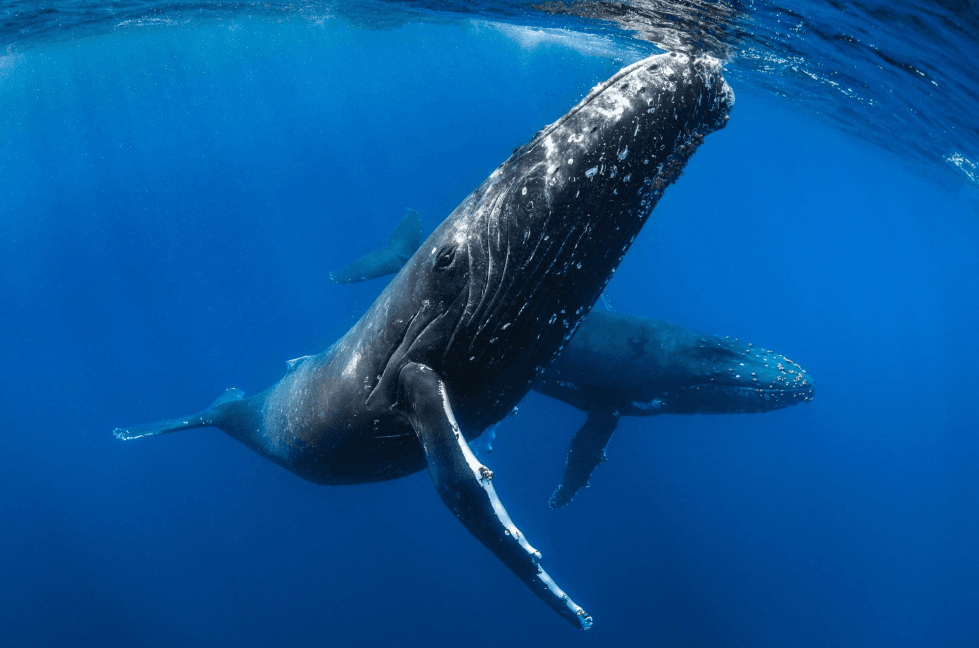
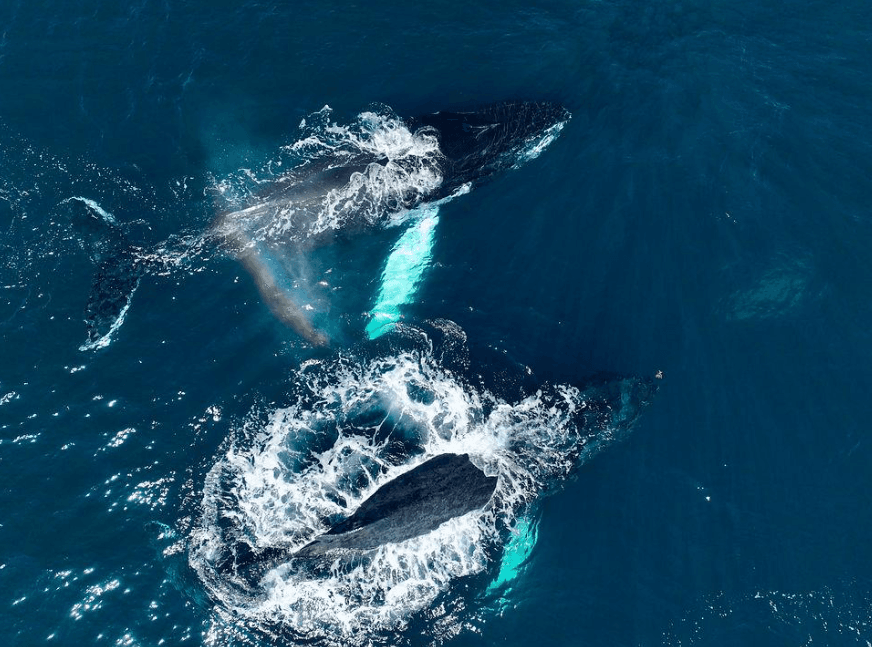
Samaná Bay in the Dominican Republic is a recognized destination for observing humpback whales during their seasonal breeding period. Visitors may see whales surface, dive, or display other natural behaviors from authorized whale-watching vessels.
Acoustic research can investigate another part of the experience: the sounds whales produce beneath the surface and the conditions under which those sounds can be detected.
If suitable hydrophone recordings and environmental measurements are available, researchers could use propagation models to estimate the detection range of particular vocalizations in Samaná waters.
However, there is no single detection distance that should be assumed for all whale songs in the bay. Estimates would depend on the source sound, recording location, background noise, water conditions, and equipment used.
It would also be inappropriate to claim that a whale detected acoustically is necessarily close to a particular tour boat. Sound can travel away from its source, and the distance cannot usually be determined from the presence of a sound alone.
For visitors, this is a reminder that the underwater environment extends beyond what can be seen from the surface. Whale-watching trips focus primarily on visual observation, while detailed sound-propagation research requires specialized equipment and carefully designed measurements.
When planning a Samaná whale-watching trip, choose a responsible operator that follows local wildlife-viewing rules and gives whales appropriate space. Respectful observation helps minimize unnecessary disturbance while allowing visitors to appreciate these remarkable marine animals.
Why Understanding Underwater Sound Distance Matters
Estimating how far humpback whale sounds travel requires scientists to consider much more than the strength of a recording.
They need to understand the original sound, how acoustic energy spreads, how frequency influences propagation, how the underwater environment affects the signal, and whether the sound remains distinguishable from background noise.
Hydrophones provide essential measurements, while mathematical models help researchers predict sound levels at different distances. Field observations and calibrated equipment can improve the reliability of those estimates.
Most importantly, researchers must distinguish between physical sound propagation, successful acoustic detection, and accurate source localization. Each requires different evidence.
For Samaná and other important whale habitats, these methods can help scientists interpret underwater recordings and improve their understanding of whale vocal behavior.
The ocean is not simply a place where whale sounds travel a fixed distance. It is a changing acoustic environment, and understanding that environment is essential to learning more about the animals that live within it.
Frequently Asked Questions
How far can humpback whale sounds travel underwater?
Humpback whale sounds can travel considerable distances under suitable conditions, but there is no universal distance. The range depends on the vocalization, underwater environment, background noise, and receiver sensitivity.
Can scientists calculate the exact distance of a whale from its song?
Not usually from a single recording alone. Researchers need additional information, such as source-level estimates, environmental measurements, multiple receivers, or other suitable evidence.
Do all whale sounds travel the same distance?
No. Different frequencies and sound levels experience different propagation conditions. Even parts of the same vocalization may be detectable over different distances.
What is a hydrophone used for?
A hydrophone records underwater sounds. Scientists use hydrophones to study whale vocalizations, monitor marine soundscapes, and collect data for acoustic analysis.
Does boat noise reduce the distance at which whale songs can be heard?
It can reduce detection distance by masking vocalizations. The effect depends on the noise level and frequency, the whale sound, and the receiver's ability to distinguish the signal from the background.
Can researchers use whale songs to locate whales in Samaná Bay?
Acoustic recordings can contribute to locating whales when suitable methods and data are available. A single detection, however, does not automatically establish the whale's exact position.
Why does underwater sound research matter for whale conservation?
Acoustic research can help scientists monitor vocal activity and investigate when and where whale sounds are detected. It can support conservation research, although acoustic detections alone do not provide a complete picture of whale abundance or behavior.

Local explorer & expert guide in Los Haitises Park Tours.