How Do Scientists Match Humpback Whale Sightings Across Different Days Using Photo Identification?
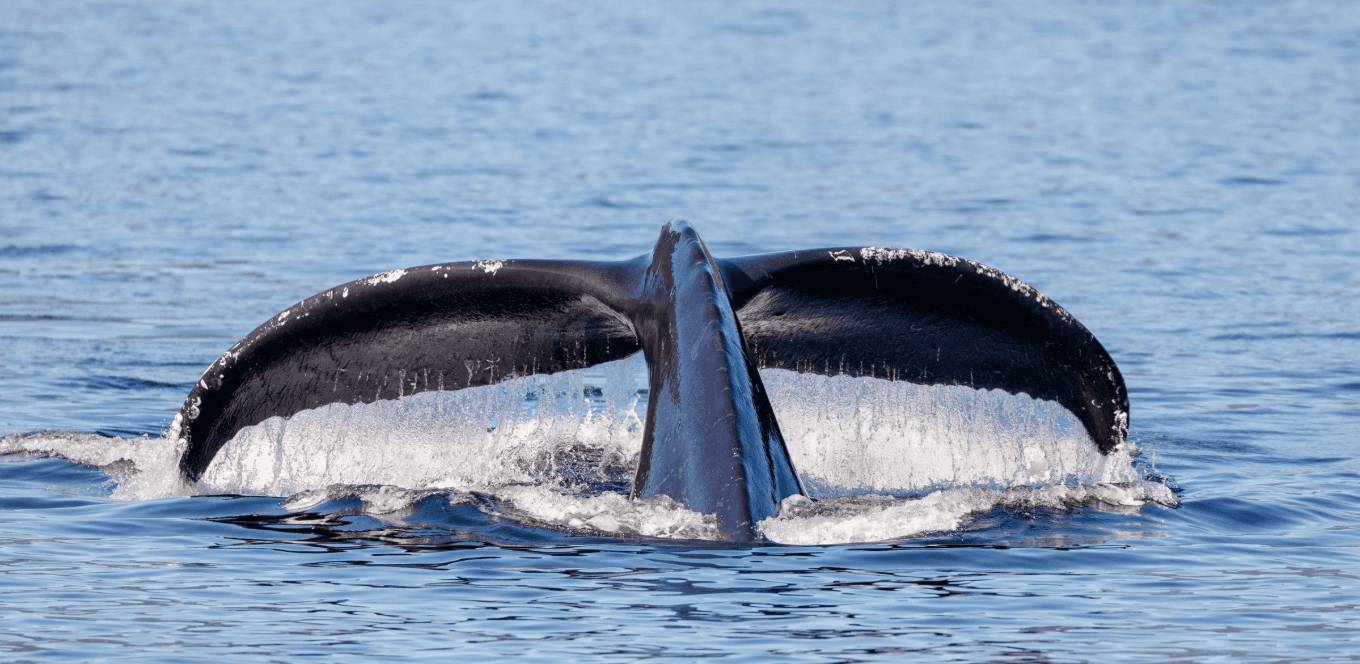
Imagine seeing a humpback whale lift its tail above the water during a whale-watching trip in Samaná Bay. A few days later, another observer photographs a whale with similar markings in the same region. Could it be the same animal?
Scientists investigate questions like this through photo identification, a research method that uses recognizable physical features to distinguish individual whales. By comparing photographs collected at different times, researchers can build records of known individuals and investigate how whales move through their environment.
For humpback whales, the underside of the tail fluke is particularly useful because it often displays a combination of natural pigmentation patterns, scars, and distinctive markings. These features can help researchers assess whether two sightings may involve the same whale.
However, successful identification requires more than noticing that two photographs look alike. Image quality, viewing angle, changes in markings, and the possibility of similar-looking whales all influence the reliability of a match.
What Is Humpback Whale Photo Identification?
Photo identification is a non-invasive research technique in which scientists use photographs of recognizable physical features to distinguish individual animals.
For humpback whales, researchers commonly photograph the underside of the tail fluke when the whale raises it above the water. The pattern of light and dark pigmentation can vary considerably among individuals.
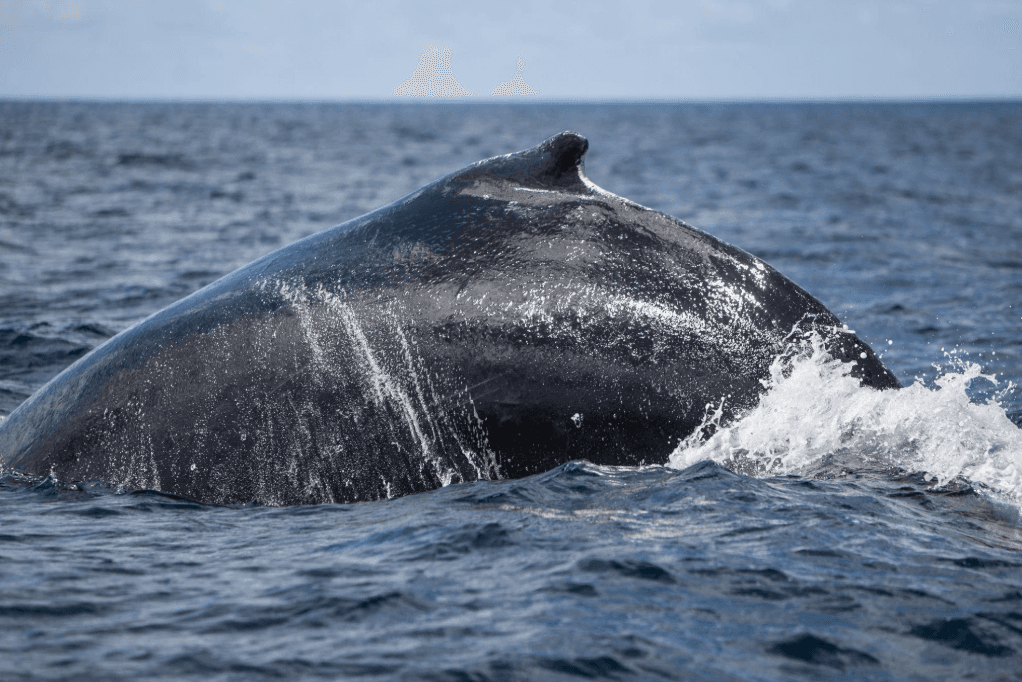
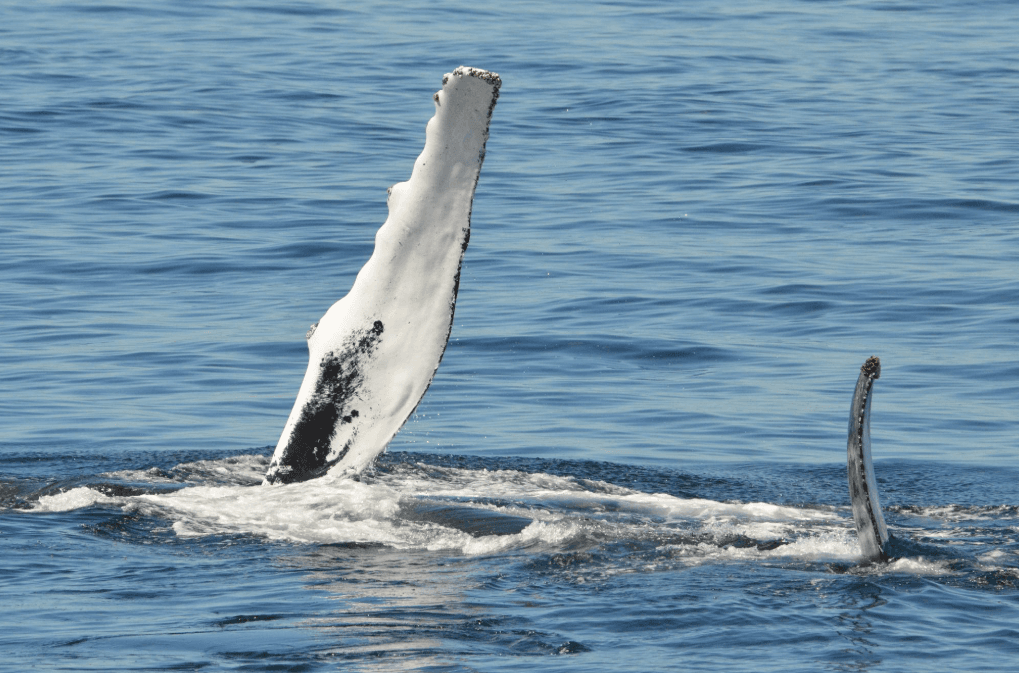
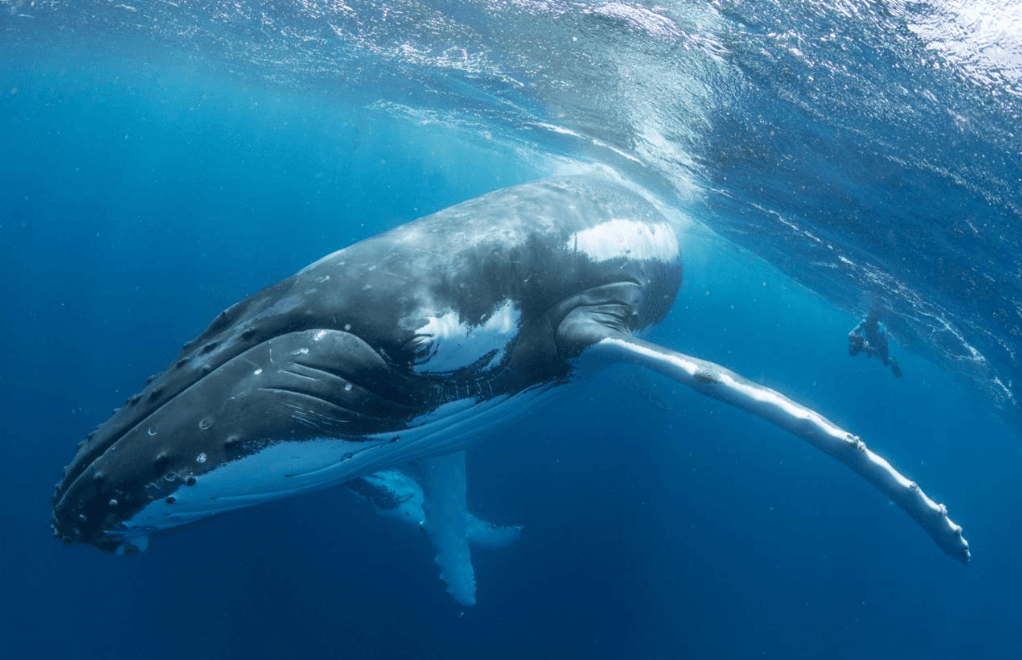
Researchers may also record other visible characteristics, including scars, distinctive markings, and features of the dorsal fin. Depending on the research project, photographs of the head or other body areas may provide additional information.
Each useful photograph becomes part of a larger identification record. When a new sighting occurs, researchers compare the new image with existing records to determine whether the whale has been documented before.
This approach allows scientists to study individual whales without needing to capture or physically tag every animal.
Why Are Tail-Fluke Patterns Useful?
The underside of a humpback whale's tail can provide a valuable visual reference. Some flukes display extensive white pigmentation, while others have darker areas or contrasting patterns. Their edges may also show distinctive shapes, notches, or scars.
A photograph can capture several of these features simultaneously, creating a pattern that researchers can compare with earlier images.
Three characteristics are particularly useful:
- Pigmentation: The distribution of light and dark areas across the underside of the fluke.
- Edge features: Notches, irregularities, and other visible differences along the fluke's outline.
- Scars and markings: Distinctive marks that can help distinguish one individual from another.
Researchers consider the combination of visible features rather than relying on a single characteristic. Two whales might have similar overall coloring but different edge patterns or scars.
Natural markings can also change over time. New scars may develop, and existing marks may become more or less visible in different photographs. Scientists therefore need to consider both persistent features and changes between sightings.
How Scientists Match Photographs From Different Days
Matching sightings is a structured process. Researchers need to preserve the quality of the original observations, compare relevant features, and assess whether the evidence supports an identification.
Step 1: Capture a useful photograph
The process begins when an observer photographs a whale. A clear image of the underside of the tail fluke is especially valuable because it can reveal the pigmentation pattern and edge details.
Photographs taken at the wrong angle, in poor lighting, or when the tail is partly obscured may provide less information. A blurry image might still document a sighting, but it may not be suitable for confidently identifying an individual.
Researchers should retain original images whenever possible rather than relying only on heavily edited or compressed copies.
Step 2: Record the sighting details
A photograph becomes more useful when accompanied by observation information.
Researchers may record the date, approximate location, time, photographer, image quality, and any relevant behavioral observations. Depending on the project, environmental conditions and the method used to obtain the photograph may also be documented.
These details help researchers organize their records and understand the context of each sighting.
Importantly, location and date are supporting information rather than proof of identity. Two whales seen in the same bay on consecutive days are not necessarily the same individual.
Step 3: Prepare the photograph for comparison
Researchers select images that show enough of the tail fluke to compare identifying characteristics. They may adjust display size or orientation for visual comparison, but should avoid edits that distort the underlying markings.
A useful comparison focuses on the actual pattern and shape of the fluke, not superficial differences caused by lighting, image resolution, or camera settings.
When two photographs show different portions of the fluke, the researcher must also consider whether the apparent mismatch results from incomplete visibility.
Step 4: Search the existing photo catalog
Researchers may maintain a catalog containing photographs of previously documented whales. Each record can include the best available identification images, sighting dates, locations, and other relevant information.
When a new photograph arrives, the researcher searches for possible matches in the catalog.
For a large collection, photographs may be grouped according to broad characteristics, such as pigmentation or other visible features, to make the search more manageable. Computer-assisted tools can also help identify candidate photographs.
These tools narrow the possibilities, but a proposed match still needs careful evaluation.
Step 5: Compare distinctive features
Researchers compare the new photograph with candidate images. They look at the distribution of pigmentation, the outline of the fluke, visible scars, and the relative positions of recognizable markings.
A strong match should be consistent across multiple features. A similar color pattern alone may not be sufficient if the edge shape or other visible characteristics disagree.
If a photograph is unclear or shows only part of the tail, researchers may leave the identification unresolved until better evidence becomes available.
Step 6: Assign an identification outcome
After comparison, researchers decide how to classify the sighting according to their project's procedures.
Possible outcomes include a match to a previously identified whale, a new individual, or an unidentified sighting that does not provide enough evidence for a confident decision.
Not every photograph can be matched. Leaving a sighting unidentified is a scientifically responsible choice when the available evidence is insufficient.
Step 7: Update the whale's sighting history
When a match is accepted, researchers add the new observation to the whale's existing record. The updated record may show that the individual was documented on multiple dates or in different areas.
Over time, these records can support research into movement, site use, seasonal presence, and patterns of reappearance.
The value of the catalog grows when researchers maintain consistent identification standards and document uncertainty rather than forcing every image into an existing record.
How Do Scientists Avoid Confusing Two Similar-Looking Whales?
One of the main challenges is that two different whales can share broadly similar pigmentation patterns. A reliable identification process must therefore look for a combination of distinctive features.
Researchers compare the entire visible pattern where possible, including irregular markings and the shape of the fluke's trailing edge. They also examine whether the photographs are sufficiently clear to support a meaningful comparison.
When the images disagree, researchers consider whether the difference could be explained by viewing angle, lighting, incomplete visibility, or a genuine change in the whale's markings.
If the mismatch cannot be explained confidently, the identification should remain uncertain.
For important research applications, some projects use independent reviewers or documented quality-control procedures. Having another qualified person assess a proposed match can help reveal overlooked differences and reduce identification errors.
The aim is not to find a match at any cost. It is to determine whether the available photographs support the conclusion that the two sightings involve the same animal.
Can Artificial Intelligence Help Identify Humpback Whales?
Computer vision and machine-learning techniques can assist researchers in managing large collections of whale photographs.
Depending on the system, software may help organize images, detect a tail fluke, compare patterns, or rank photographs that appear visually similar. This can reduce the time needed to search a large catalog.
However, automated matching has limitations.
A blurry photograph may contain too little detail for dependable comparison. Changes in camera angle, lighting, water droplets, and the amount of the fluke visible can also affect the result. A system trained on one dataset may perform less effectively on photographs collected under different conditions.
There is also a risk of false matches, in which photographs of different whales are incorrectly associated with one individual.
For these reasons, automated results should be evaluated using appropriate validation methods and, when necessary, human review. Researchers should not treat a computer's similarity score as definitive proof of identity.
What If a Whale's Tail Markings Change?
Whale markings are not necessarily fixed throughout an animal's life. Scars can develop, the appearance of existing marks may change, and the visibility of pigmentation can vary with photographic conditions.
This does not make long-term identification impossible. Instead, it means that scientists must interpret photographs in a way that accounts for changes over time.
Older photographs may still contain enough persistent features to support a match, especially when researchers can compare several images from different dates.
When the appearance of a whale changes significantly, scientists may rely more heavily on other recognizable features and the quality of the available historical records.
A responsible catalog preserves previous identification photographs rather than replacing them with only the newest image. This allows researchers to review how the whale's appearance has changed and reassess earlier matches if necessary.
What Can Repeated Sightings Tell Scientists?
Once researchers have reliable matches across multiple dates, they can investigate patterns that are difficult to detect from isolated observations.
For example, repeated sightings may help researchers determine whether a whale returns to a particular area, how long it remains documented in a region, or whether individuals are observed in more than one location.
However, photo identification has an important limitation: it records animals when they are photographed, not every time they are present.
A whale that is not photographed for several days may still be nearby. Conversely, two sightings separated by a short period do not necessarily mean the whale remained continuously in the same area.
Scientists therefore interpret photo-identification records alongside survey effort, observation conditions, and other available data.
These records can provide valuable evidence about individual movements, but they do not automatically reveal every detail of a whale's journey.
How Does Photo Identification Apply to Samaná Whale Watching?
Samaná Bay and the surrounding waters of the Dominican Republic are well known for seasonal visits by North Atlantic humpback whales. During the breeding season, observers may see whales surfacing, diving, breaching, or raising their tail flukes.
Photographs collected under appropriate conditions can potentially contribute to scientific documentation when they meet the needs of a research project. A clear tail-fluke image may provide useful identifying information, while the date and location can add context to the observation.
Nevertheless, an ordinary tourist photograph does not automatically establish the identity of a whale or become part of a scientific catalog. Researchers need suitable image quality, reliable sighting information, and consistent identification procedures.
It is also important not to assume that a whale photographed in Samaná has been recorded there before simply because it resembles an image from another location. A defensible match requires comparison with actual reference photographs and sufficient evidence.
Visitors can help by following their tour operator's guidance, respecting whale-watching rules, and avoiding actions that disturb the animals in an attempt to obtain a photograph.
If a research organization accepts public whale photographs, observers should follow its submission instructions and provide accurate information about when and where each image was taken.
Photo Identification and Whale Conservation
Identifying individual whales can help scientists build a more detailed understanding of whale populations.
When observations are collected consistently over time, researchers may investigate patterns of site use, reappearance, and movement between areas. These findings can contribute to broader studies of whale ecology and conservation.
Photo-identification records may also support collaborative research when different teams use compatible methods and can compare records responsibly.
However, identification data have limits. Not every whale will be photographed, and the probability of obtaining a useful image may vary with sea conditions, behavior, and observation effort. The animals represented in a catalog may therefore not perfectly reflect the entire population.
Researchers must account for these limitations before using sighting histories to draw conclusions about abundance or population trends.
Frequently Asked Questions
Can scientists recognize the same humpback whale on different days?
Yes, when photographs contain enough distinctive information. Researchers compare tail-fluke patterns, scars, and other visible features with existing identification records. Some sightings remain unresolved because the photographs are not sufficiently clear.
Why do scientists photograph humpback whale tails?
The underside of a humpback whale's tail often displays recognizable pigmentation patterns, scars, and edge features. These characteristics can help distinguish individuals when photographs are suitable for comparison.
Can two humpback whales have similar tail markings?
Yes. Similarities can occur, which is why researchers compare combinations of features rather than relying on general color patterns alone.
Does artificial intelligence identify whales perfectly?
No. Automated systems can help search and compare photographs, but poor image quality, changing appearance, and similar-looking individuals can cause errors. Reliable results require testing and appropriate verification.
Can a tourist's photograph help whale research in Samaná?
Potentially. A clear image with accurate date and location information may be useful to an appropriate research program if that program accepts public submissions. Acceptance and scientific identification depend on the project's requirements.
Does seeing the same whale twice mean it stayed in the same place?
Not necessarily. Two sightings establish that the whale was observed in those locations at those times, assuming the identification is reliable. They do not reveal its complete movements between observations.
Conclusion
Humpback whale photo identification allows scientists to connect sightings across different days by comparing recognizable physical features, particularly the natural patterns on the underside of the tail fluke.
The process involves collecting useful photographs, recording sighting information, searching existing catalogs, comparing distinctive markings, and evaluating the strength of each proposed match.
Not every sighting can be identified confidently, and that uncertainty is an important part of responsible research. By combining careful photography with consistent records and validated comparison methods, scientists can build a more useful picture of individual whale movements and their use of marine habitats.
For Samaná whale watching, photo identification offers a fascinating reminder that each whale may have a history extending beyond a single encounter. A photograph can become more than a memorable travel image when it contains enough information to support careful scientific investigation.

Local explorer & expert guide in Los Haitises Park Tours.