How Do Humpback Whales Respond to Changes in Water Depth in Samaná Bay?
The ocean may look like one continuous stretch of blue, but the underwater landscape changes considerably from one location to another. Some areas have gently sloping seabeds, while others contain deeper channels, submerged ridges, and steep underwater slopes.
These differences create an important question for whale watchers visiting Samaná Bay in the Dominican Republic: how do changes in water depth affect humpback whales as they move through their seasonal habitat?
Water depth is one part of the marine environment that scientists consider when studying whale distribution and movement. Although depth alone does not determine where a whale travels, it can influence the available space for swimming, the characteristics of the surrounding habitat, and the distribution of other marine organisms.
Understanding these relationships helps explain why the underwater geography of Samaná Bay matters, even when visitors cannot see the seabed from a whale-watching boat.
What Does Water Depth Mean for Humpback Whales?
Water depth describes the distance between the ocean surface and the seabed. It varies across coastal waters, bays, continental shelves, and the open ocean.
Humpback whales are large marine mammals capable of swimming through a range of water depths. Their movement is not restricted to one particular depth, and different individuals may use different parts of the marine environment depending on their activities.
The depth of the water can influence how much vertical space is available for diving and maneuvering. It can also be associated with differences in currents, seabed structure, and the distribution of marine life.
However, it would be inaccurate to assume that humpback whales always prefer shallow water or consistently avoid deeper areas. Their habitat use depends on multiple factors, including breeding activities, movement, prey availability, and local ocean conditions.
How Underwater Geography Shapes the Marine Environment
The seafloor is not flat. Underwater slopes, channels, ridges, and depressions help shape the physical environment.
These features can influence local currents and the movement of water. In some settings, interactions between currents and underwater topography can affect how nutrients and marine organisms are distributed.
For humpback whales, such environmental differences may matter indirectly by influencing the conditions in which they travel or encounter other marine life.
Samaná Bay is part of a geographically varied coastal region. Its surrounding coastline, offshore waters, and underwater terrain contribute to a marine environment that changes across relatively short distances.
Nevertheless, understanding a specific whale's route requires more than knowing the depth of the water. Researchers need observations of whale movements alongside information about bathymetry, currents, and other environmental conditions.
Do Humpback Whales Prefer Shallow Water?
Humpback whales can use relatively shallow coastal waters as well as deeper marine environments. The suitability of a particular location depends on what the whale is doing and the conditions it encounters.
During the breeding season, humpbacks gather in warm waters where mating and calving occur. These breeding habitats can include coastal and offshore areas, and the exact water depths used vary by location.
In Samaná Bay, whales may be observed moving through different parts of the surrounding waters. A sighting in a particular depth range does not necessarily mean that the animal prefers that depth over every other available area.
To establish a genuine preference, scientists would need to compare where whales are observed with the availability of different habitats and account for other influences on their movements.
How Water Depth May Affect Diving and Maneuvering
Water depth can influence the space available for a whale to descend, turn, and change its position underwater.
Vertical swimming space
Deeper water provides more vertical space for a whale to descend without approaching the seabed. In shallower areas, the available depth naturally limits how far the animal can travel downward.
This does not mean that a humpback whale must dive deeply whenever deep water is available. The depth of an individual dive depends on its behavior and circumstances.
Changes in swimming direction
A whale may alter its swimming direction while traveling through different underwater environments. Seabed depth can be one element of the surrounding conditions, but a turn cannot automatically be attributed to a change in depth.
Observations of the whale's movements, combined with underwater maps and tracking data, are needed to investigate whether a particular terrain feature influences its route.
Differences between individual dives
Not every dive has the same purpose or depth. Humpback whales may make relatively shallow dives or descend farther underwater, depending on their activity.
A whale seen surfacing in one location might have traveled through water of varying depth during its preceding dive. Surface observations alone usually cannot reveal the exact underwater path.
Does Water Depth Affect Where Whales Are Seen?
It can be associated with sighting patterns, but it is only one factor to consider.
Whale sightings depend on where animals are traveling, how long they remain near the surface, weather conditions, visibility, and the distribution of whale-watching effort.
For example, whales traveling through an area may remain underwater while boats pass nearby, making them temporarily difficult to detect. A location with frequent sightings does not necessarily have a greater number of whales than a location where surfacing events are harder to observe.
Researchers therefore distinguish between whale presence and whale detectability when interpreting sighting records.
For visitors to Samaná Bay, this explains why a whale may appear in one area on one day and somewhere else on another. Changes in sightings do not necessarily indicate that the whales have abandoned a particular habitat.
How Water Depth Connects With Food Availability
Water depth can influence the physical conditions that support marine ecosystems. In some areas, underwater terrain and currents affect the distribution of nutrients and prey organisms.
However, humpback whales visiting Caribbean breeding grounds generally rely on energy stored during feeding periods elsewhere in their migration cycle. Their seasonal presence in Samaná Bay is primarily associated with breeding activities rather than intensive feeding.
This distinction is important. Although depth can influence marine ecosystems, it would be misleading to claim that humpback whales gather in Samaná Bay simply because a particular depth contains abundant food.
The relationship between depth, prey availability, and whale distribution differs among habitats and seasons.
How Scientists Study Water Depth and Whale Movement
Scientists use several methods to investigate whether underwater geography is associated with humpback whale movements.
Bathymetric maps: These maps show variations in seafloor depth and help researchers identify slopes, channels, and other underwater features.
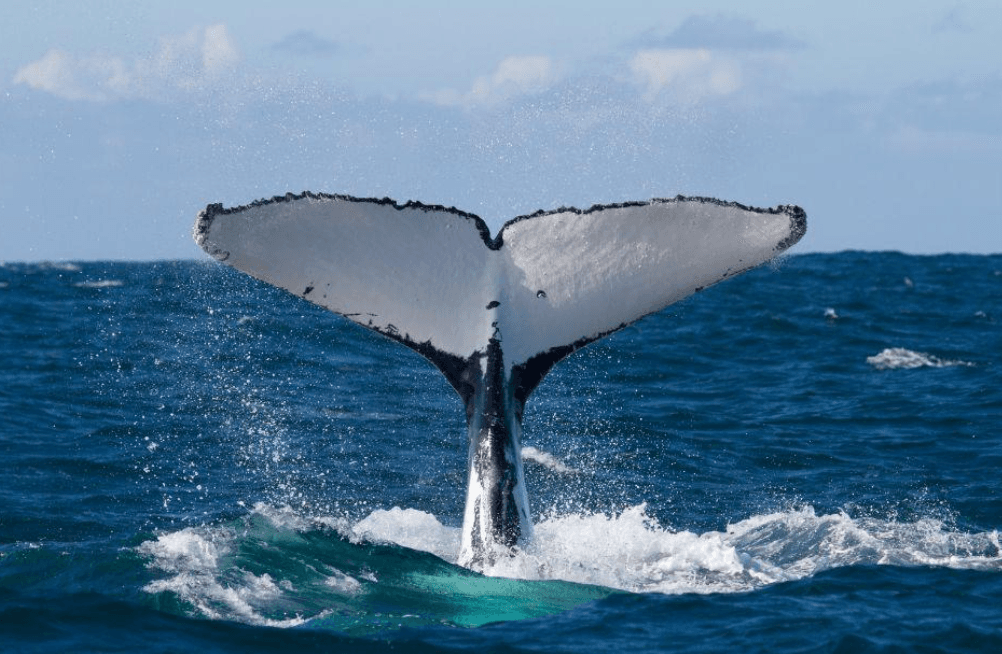
Photo-identification: Researchers use distinctive markings on whale tail flukes to identify individuals and compare sightings across locations and years.
Satellite tracking: Where suitable research tags are used, location data can help scientists examine routes and movement patterns.
Environmental measurements: Information about currents, sea conditions, and other physical characteristics helps researchers interpret whale movements.
Statistical analysis: Researchers can compare whale locations with available habitat to test whether whales use some depth ranges more frequently than expected.
Combining these methods is essential. A map of the seabed alone cannot show how whales use the area, while a collection of whale sightings without environmental information may not explain why the animals were present.
What This Means for Whale Watching in Samaná Bay
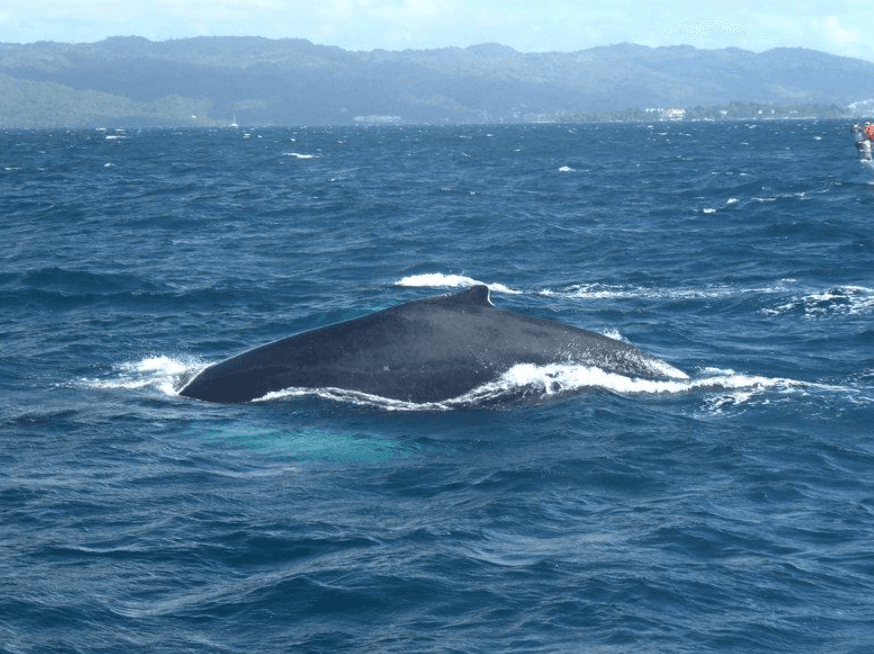
For visitors, water depth is usually invisible during a whale-watching trip. The sea may appear uniform from the surface even when the seabed below changes considerably.
Understanding this hidden landscape adds another dimension to the experience. A whale's visible movements take place within a much larger environment that includes underwater terrain, currents, and changing water conditions.
Guides may be able to explain general features of the local marine environment, but they cannot determine a whale's exact underwater route simply by observing its last surfacing.
Responsible whale watching should prioritize the animals' welfare and comply with local regulations. Boats should maintain appropriate distances and avoid chasing whales or interfering with their natural movements.
Frequently Asked Questions
Does water depth affect humpback whale movement?
Water depth can influence the space available for swimming and diving and may be associated with other habitat characteristics. However, whale movement also depends on activity, environmental conditions, and individual behavior.
Do humpback whales stay in shallow water during the breeding season?
Not exclusively. Humpback whales use a range of coastal and offshore habitats during breeding and calving. Their distribution varies by region and local conditions.
Can humpback whales swim over deep underwater channels?
Humpback whales are capable of traveling through deep water. Whether an individual uses a particular channel depends on its route and behavior; depth alone does not establish that it will follow a specific feature.
Why are whales sometimes seen in different locations on different days?
Whales move naturally, and sightings are affected by their movements, time spent underwater, sea conditions, and observation effort. A change in sighting location does not necessarily indicate a change in the local whale population.
Can tourists tell how deep a whale dives?
Not reliably from a surface sighting alone. Specialized research equipment can measure dive depth, but ordinary visual observations generally cannot reveal the exact depth reached underwater.
Is underwater terrain important for whale conservation?
Yes. Mapping the marine environment and understanding how animals use different habitats can support research and conservation planning. Effective conservation also considers disturbance, vessel activity, habitat conditions, and other potential threats.
Conclusion
Water depth is an important feature of the marine environment surrounding Samaná Bay. It influences the vertical space available for swimming and diving and is connected with other physical characteristics of the ocean.
However, humpback whale movements cannot be explained by depth alone. Breeding behavior, individual activity, ocean conditions, and other environmental factors all contribute to where whales travel.
For whale watchers, the underwater landscape offers a useful reminder that the visible ocean surface reveals only part of the story. Beneath the waves, humpback whales move through a varied environment that scientists continue to investigate.
By understanding this connection between water depth and whale habitat, visitors can appreciate Samaná Bay not only as a destination for whale watching but also as a complex marine environment worthy of careful observation and protection.

Local explorer & expert guide in Los Haitises Park Tours.