How Humpback Whale Calves Grow and Develop in Samaná Bay
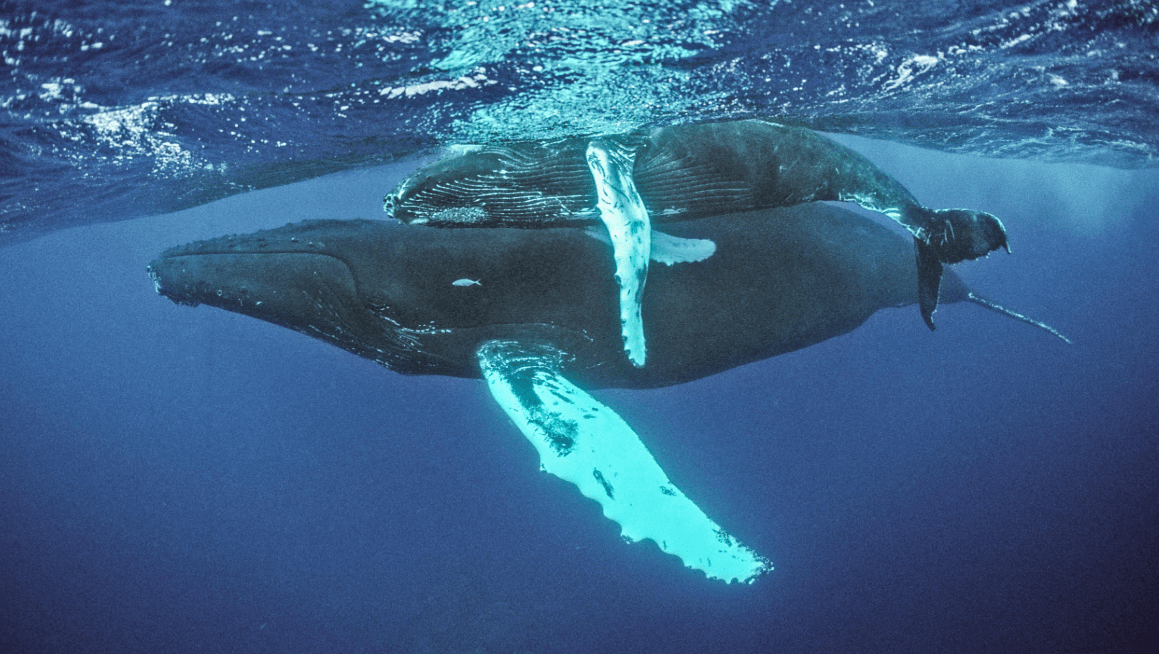
One of the most memorable sights during humpback whale season in Samaná Bay is a mother swimming with her young calf. The smaller whale may surface beside the adult, move close to her body, or appear briefly above the water before diving again.
These encounters offer a glimpse into the early life of one of the ocean's most impressive marine mammals. A humpback whale calf must learn to swim efficiently, surface to breathe, nurse from its mother, and build the strength needed for a long migration.
Samaná Bay, in the Dominican Republic, is part of the seasonal breeding and calving habitat used by North Atlantic humpback whales. Understanding how calves develop helps visitors appreciate why these mother-and-calf encounters deserve patience and respectful observation.
Where Are Humpback Whale Calves Born?
North Atlantic humpback whales migrate between high-latitude feeding grounds and warmer waters in the Caribbean. During the breeding season, some travel to the waters around the Dominican Republic, including Samaná Bay.
Warm tropical and subtropical waters provide important breeding habitat. Pregnant females give birth in these lower-latitude areas, where newborn calves begin their lives before the family eventually migrates toward northern feeding grounds.
Not every humpback whale gives birth in Samaná Bay. The Caribbean contains several areas used by the wider North Atlantic population, and whales move across a broad region.
For visitors, seeing a calf in Samaná is an opportunity to observe a young whale during an important stage of its development.
What Is a Newborn Humpback Whale Like?
A newborn humpback whale is already a large marine mammal, although it is much smaller than an adult. Calves are born with the basic physical features they need to live in the ocean, including flippers, a tail fluke, and blowholes for breathing air.
Despite their size, newborn calves still depend heavily on their mothers. They need nourishment, time to develop their swimming abilities, and opportunities to rest while remaining close to the adult.
Exact measurements vary among calves, and an observer on a boat generally cannot determine a calf's age or weight reliably from appearance alone.
How Do Humpback Whale Calves Grow?
Growth begins with nourishment from the mother's milk. Humpback whale milk is rich in fat and energy, helping calves grow rapidly during a relatively short nursing period.
A calf drinks milk underwater by nursing from its mother. Unlike a human baby, it does not need to surface to feed, although it must come to the surface to breathe.
As the calf grows, it develops the body size and energy reserves needed for its demanding first migration. Its progress depends on factors such as its health, nursing success, and the conditions experienced by the mother and calf.
Researchers study these early-life stages to better understand reproduction, calf survival, and the needs of humpback whales in their breeding habitats.
How Do Calves Learn to Swim?
Humpback whale calves can swim soon after birth, but swimming effectively in the open ocean requires strength and coordination.
A young calf may swim close to its mother and follow her movements. Staying nearby helps it remain with the adult as they travel through the water and provides opportunities to rest between periods of activity.
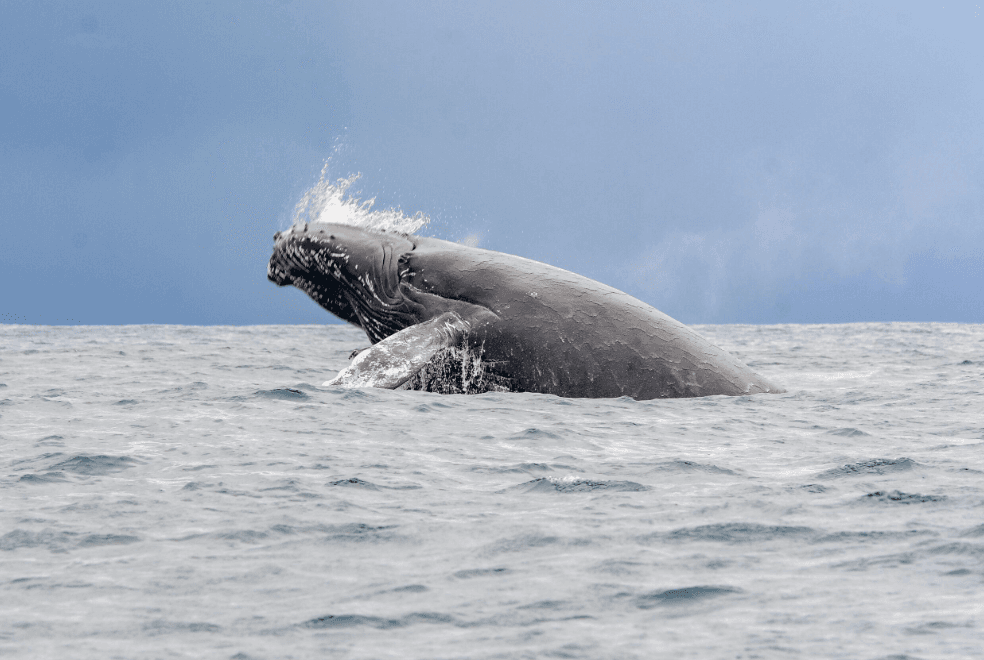
Observers may see a calf rising to the surface, rolling, changing direction, or moving beside its mother. These behaviors can look playful, but an observer cannot always determine their purpose.
The calf's movements also take place in a constantly changing environment. Waves, currents, other whales, and the mother's movements all influence how the pair travels.
Why Do Calves Stay Close to Their Mothers?
A humpback whale calf depends on its mother for milk during early development. Remaining close also helps maintain contact while the pair moves through the ocean.
The mother provides essential care during a vulnerable period in the calf's life. Her behavior and movement can influence the calf's opportunities to nurse, rest, and travel.
For whale watchers, this close association is one reason to observe mother-and-calf pairs especially carefully. Boats should not approach in ways that disrupt the animals or separate them.
A calf swimming near its mother is behaving in a way that supports their association. It does not mean the animals are approaching a boat because they want human interaction.
How Do Humpback Whale Calves Learn to Breathe?
Like all humpback whales, calves breathe air through blowholes on top of their heads. They must surface regularly to exchange air before returning underwater.
A calf may surface near its mother, making it possible for visitors to observe two whales breathing in the same area. The timing of their surfacing is not always identical, however.
Calves develop their own patterns of movement and diving as they grow. Their breathing and swimming must work together so they can remain active while returning to the surface for air.
If you see a calf surface during a Samaná whale-watching trip, watch quietly and allow the animals to continue their natural behavior.
What Do Humpback Whale Calves Eat?
Young humpback whales initially receive nutrition from their mothers' milk. This milk provides the energy needed for rapid growth.
As calves develop, they eventually transition away from nursing and toward the feeding behavior characteristic of older humpback whales. Humpbacks feed primarily on small schooling fish and krill in productive feeding areas, although the exact diet varies by location.
The warm waters around Samaná are primarily associated with breeding and calving rather than the intensive feeding that humpbacks undertake in their northern feeding grounds.
This distinction helps explain why migration is so important. A calf must grow and develop during its early months before the family travels toward areas where food is more abundant.
When Do Humpback Whale Calves Migrate North?
After the breeding season, humpback whales leave Caribbean waters and travel toward higher-latitude feeding grounds. Mothers and calves are part of this seasonal movement.
The journey is demanding because the young whale must travel over a long distance while continuing to develop. The timing of departure and the progress of individual animals can vary.
The calf's early growth, nursing, and physical development are important parts of preparing for life in the North Atlantic. Once in feeding areas, humpbacks can take advantage of seasonal prey availability to build energy reserves.
Visitors should remember that the whales do not all leave on one fixed date. Seasonal migration is a natural process, and individual movements differ.
How Can You Recognize a Mother-and-Calf Pair in Samaná Bay?
A mother-and-calf pair may be recognizable by the presence of a smaller whale swimming near a much larger adult. The pair may surface in the same general area or move through the water together.
However, size differences alone are not always enough for an inexperienced observer to confirm a calf. Viewing distance, the whale's position, and the amount of the body visible can make identification difficult.
Follow your guide's observations rather than trying to approach the animals for a closer look. Experienced guides can help explain what you are seeing while respecting appropriate viewing distances.
Responsible Whale Watching Around Calves
Mother-and-calf pairs are particularly important to protect because calves are still developing and depend on their mothers.
When choosing a whale-watching excursion in Samaná, look for an operator that prioritizes responsible wildlife observation and follows applicable local rules.
During your trip:
- Follow the captain's instructions and wildlife-viewing guidelines.
- Never encourage a boat to chase or surround a mother and calf.
- Avoid loud behavior intended to attract the animals.
- Do not attempt to touch, feed, or enter the water near wild whales.
- Use binoculars or a camera zoom rather than seeking a closer approach.
- Be patient if the whales disappear underwater or move away.
Responsible observation allows visitors to appreciate these animals without treating their natural behavior as a performance.
Frequently Asked Questions About Humpback Whale Calves
Are humpback whale calves born in Samaná Bay?
Samaná Bay is part of the seasonal breeding and calving habitat used by North Atlantic humpback whales. Calves are born across the wider Caribbean breeding region, so not every calf is born in Samaná Bay.
What do baby humpback whales drink?
Humpback whale calves drink their mother's milk, which is rich in fat and energy to support growth.
Can a newborn humpback whale swim?
Yes. Calves can swim soon after birth, but they continue developing strength and coordination while remaining associated with their mothers.
How long do humpback whale calves stay with their mothers?
Calves depend on their mothers during their early months, including for nursing and support before and during their first migration. The timing of weaning and separation can vary.
Can visitors see baby whales during a Samaná whale-watching trip?
Visitors may see calves with adult whales during the breeding season, but sightings are not guaranteed. Wildlife behavior and sea conditions vary from trip to trip.
Why is it important to protect mother-and-calf pairs?
Calves depend on their mothers for nourishment and early-life support. Responsible viewing helps reduce unnecessary disturbance and allows the animals to continue their natural behavior.
Discover the Early Life of Humpback Whales in Samaná
Humpback whale calves begin life in a challenging marine environment, relying on their mothers while they grow, develop swimming skills, and prepare for migration.
Seeing a mother and calf in Samaná Bay can make the whale-watching experience especially meaningful. It offers a glimpse of the next generation of North Atlantic humpbacks and highlights the importance of protecting the waters they use.
Observe from a respectful distance, listen to your guide, and remember that the welfare of the whales matters more than getting a close photograph.

Local explorer & expert guide in Los Haitises Park Tours.