Why Do Humpback Whales Show Their Tail Flukes Before Diving in Samaná Bay?
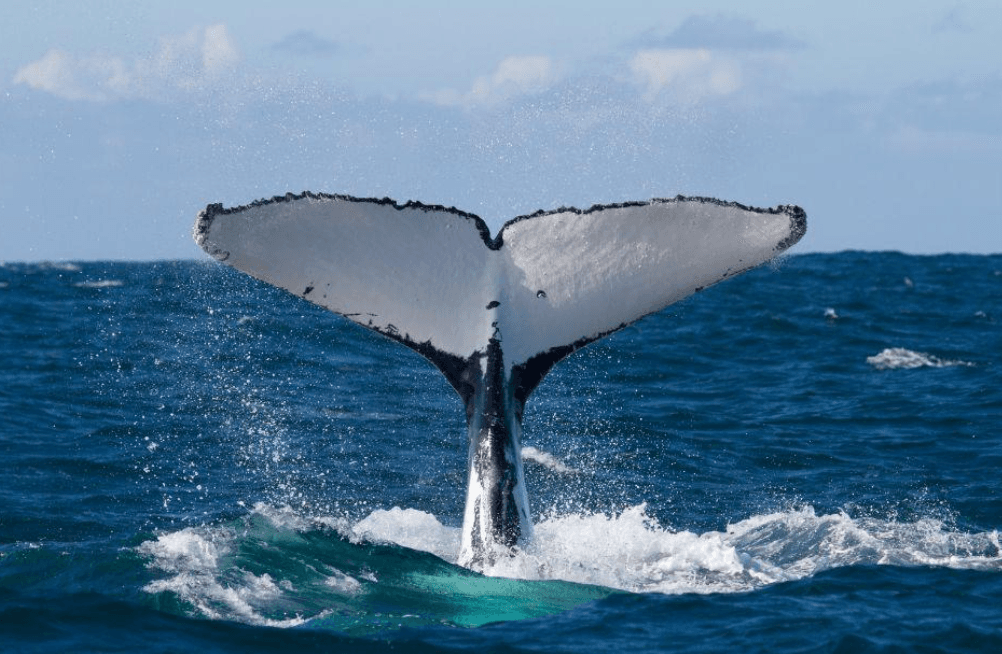
One of the most memorable sights during a whale-watching trip in Samaná Bay, Dominican Republic, is a humpback whale lifting its enormous tail above the ocean before disappearing underwater. The dark-and-white fluke rises into view, sometimes remaining visible for a few seconds before slipping beneath the surface.
For visitors, this moment can be a highlight of the entire excursion. But why does a humpback whale raise its tail before diving, and what can its markings tell you?
The answer involves the whale's swimming mechanics, diving posture, and distinctive physical characteristics. Understanding these details can help you appreciate the sighting and recognize why researchers and wildlife observers pay close attention to whale tail flukes.
What Is a Humpback Whale's Tail Fluke?
A humpback whale's tail fluke is the broad, horizontal structure at the end of its body. Unlike the vertical tail of a fish, a whale's flukes extend horizontally and move up and down to generate forward propulsion.
The flukes are powerful, flexible, and adapted to life in the ocean. Their shape allows humpback whales to move through the water, accelerate, and perform different swimming movements.
When a whale lifts its flukes above the surface, observers may see the underside, including patterns of dark pigmentation, white areas, scars, and other distinctive markings.
These features make the tail fluke much more than an impressive sight. It can also provide useful information about an individual whale.
Why Do Humpback Whales Raise Their Tails Before Diving?
A humpback whale may lift its tail flukes as part of a deeper dive. As the animal arches its back and angles its body downward, the tail may rise above the water before the whale descends.
This movement is commonly associated with a deep dive, but it does not happen before every dive. Some whales descend without exposing their flukes, and the exact movement depends on the circumstances.
Several observations help explain what visitors are seeing.
1. The Whale Is Changing Its Body Position
Before a deeper descent, a humpback whale may arch its back and angle its body downward. Its tail flukes can become visible as the rear of its body moves through the surface.
The raised tail is therefore part of the whale's changing position in the water rather than a separate action that always occurs before diving.
2. The Flukes Help Generate Propulsion
Humpback whales move their flukes up and down to propel themselves. As a whale descends, its powerful tail movements help it travel through the water.
However, seeing the tail above the surface does not reveal exactly how deep the whale intends to go or how long it will remain underwater.
3. The Whale May Be Beginning a Longer Dive
A clearly exposed tail fluke can be a useful sign that a humpback whale is starting a deeper dive. For whale watchers, this may indicate that the animal is about to disappear from view for a while.
It is not a precise timer. The whale's subsequent movements and underwater behavior cannot be predicted from the tail's appearance alone.
What Can Tail Fluke Markings Tell You?
One of the most fascinating features of humpback whales is that the undersides of their tail flukes have individual patterns.
These patterns can include different combinations of black and white pigmentation, along with scars and other surface features. The overall pattern may help researchers distinguish one whale from another.
Researchers use photographs of tail flukes in photo-identification studies. By comparing images collected at different times and locations, they can investigate whale movements, seasonal return patterns, and aspects of individual life histories.
For example, a whale photographed in a breeding area may later be recognized from its fluke pattern in another observation. Such comparisons can contribute to a broader understanding of migration, although a single photograph does not establish an animal's entire travel history.
During a Samaná whale-watching excursion, a clear view of the tail can therefore offer more than a beautiful photograph. It may capture features that scientists use to identify individual humpback whales.
Why Are Some Tail Flukes Mostly White While Others Look Dark?
Humpback whale flukes vary considerably in pigmentation. Some have extensive white areas, while others appear predominantly dark, with smaller contrasting patches.
The differences are natural characteristics of individual animals. They can be useful for identification when the pattern is photographed clearly.
A whale's fluke may also show scars or irregular edges. These can add further identifying details, although observers should not assume that every mark indicates a particular injury or event.
Lighting, water droplets, shadows, and camera exposure can affect how the markings appear in a photograph. For this reason, researchers generally benefit from clear, well-positioned images rather than relying on a single poorly lit picture.
Can You Identify an Individual Whale During Your Tour?
Sometimes, but it depends on the quality of the observation and whether suitable identification records are available.
A photograph that clearly shows the underside of the flukes may contain useful identifying features. A distant glimpse of only the upper surface may reveal much less.
If you want to photograph a tail fluke during your Samaná whale-watching trip, consider these practical tips:
- Keep your camera ready when the guide identifies a whale, while still following onboard safety instructions.
- Capture the whole fluke when possible rather than cropping off its edges.
- Take several photographs if the whale remains visible.
- Avoid assuming that two whales are different individuals just because their colors look different in photographs taken under different lighting.
- Ask your guide whether the observation can be compared with known whale-identification records.
Not every whale-watching photograph will be suitable for scientific identification, but clear images can still be valuable personal records of your trip.
Is a Raised Tail a Sign That the Whale Is Leaving?
Not necessarily.
When a humpback whale exposes its flukes and descends, it is moving out of the observer's view. That does not mean it is leaving Samaná Bay or ending its activity for the day.
The whale may remain in the area underwater, surface again later, or continue moving through the bay. A tail-fluke display alone cannot reveal its intended destination.
During the seasonal migration, humpback whales use Caribbean waters as part of their breeding and calving habitat. Their movements vary, and a whale's immediate dive should not be interpreted as evidence that it is departing the region.
For visitors, the most useful approach is to enjoy the tail display while recognizing that the whale's next movement remains uncertain.
Why Is a Tail-Fluke Photograph So Popular With Whale Watchers?
A tail-fluke photograph combines the scale of a large marine mammal with the distinctive patterns on its body. The moment can also be visually dramatic because the whale's tail rises clearly against the ocean before disappearing beneath the surface.
Unlike a brief, distant glimpse, a well-timed photograph may preserve details that are difficult to remember afterward.
For many travelers, the image becomes a personal highlight of their whale-watching experience. It can also help them explain what they saw to friends and family.
Still, a great photograph is never worth disturbing the animal or taking unnecessary risks on the boat. Follow the guide's instructions and prioritize safe, responsible wildlife observation.
Frequently Asked Questions
Do humpback whales always show their tails before diving?
No. Humpback whales can dive without exposing their flukes. A raised tail is commonly associated with a deeper dive, but it is not a feature of every descent.
What is the purpose of a humpback whale's tail flukes?
The flukes provide propulsion through up-and-down movements. Their shape and flexibility help the whale travel through the water.
Can tail markings identify individual humpback whales?
Yes. The underside patterns, pigmentation, and other distinctive features can be used in photo-identification research when images are sufficiently clear.
Why do some humpback whales have more white on their tails?
Humpback whales naturally differ in their fluke pigmentation. The amount and arrangement of dark and white areas vary among individuals.
Does a raised tail mean the whale is diving deeply?
It often accompanies a deeper dive, but the display alone cannot establish the whale's exact depth or how long it will remain underwater.
Can I photograph tail flukes in Samaná Bay?
Yes, you may have an opportunity during your excursion, but a clear view is not guaranteed. Keep your camera ready when appropriate and follow the crew's safety instructions.
Final Thoughts
A humpback whale raising its tail flukes is one of the distinctive sights visitors may encounter in Samaná Bay. The movement is often associated with a deeper dive, while the markings on the underside can reveal features that help researchers identify individual whales.
By understanding the anatomy and significance of the flukes, you can look beyond the impressive appearance and appreciate the scientific value of the observation.
During your next whale-watching trip, pay attention to the shape, pigmentation, and visible details of the tail when conditions allow. Every clear view offers another opportunity to learn about these remarkable animals and the marine environment they inhabit.
Planning a whale-watching excursion in Samaná? Bring your camera, listen to your guide, and enjoy the chance to observe humpback whales responsibly in their natural habitat.

Local explorer & expert guide in Los Haitises Park Tours.