Why Do Humpback Whales Roll Over at the Surface in Samaná Bay?
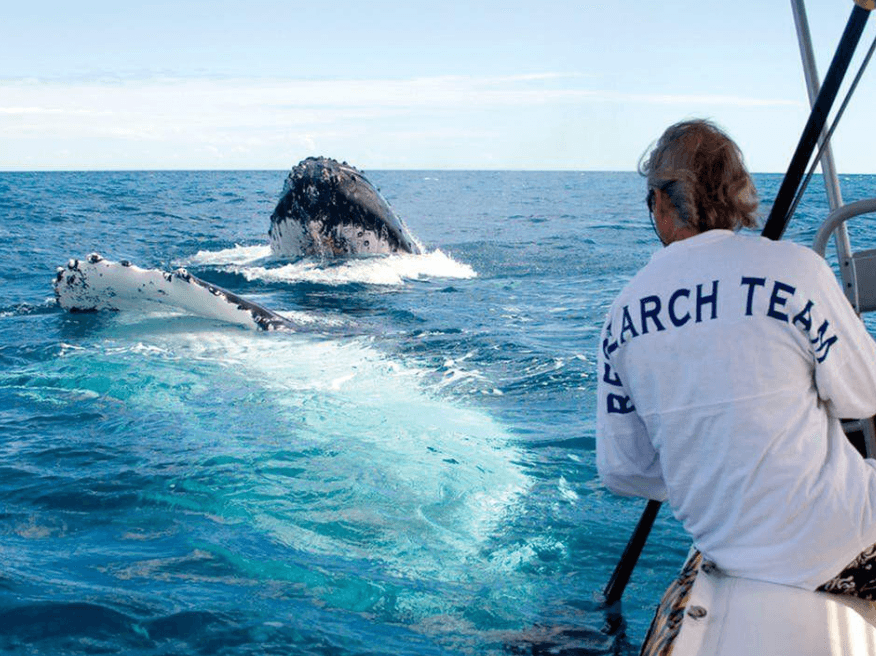
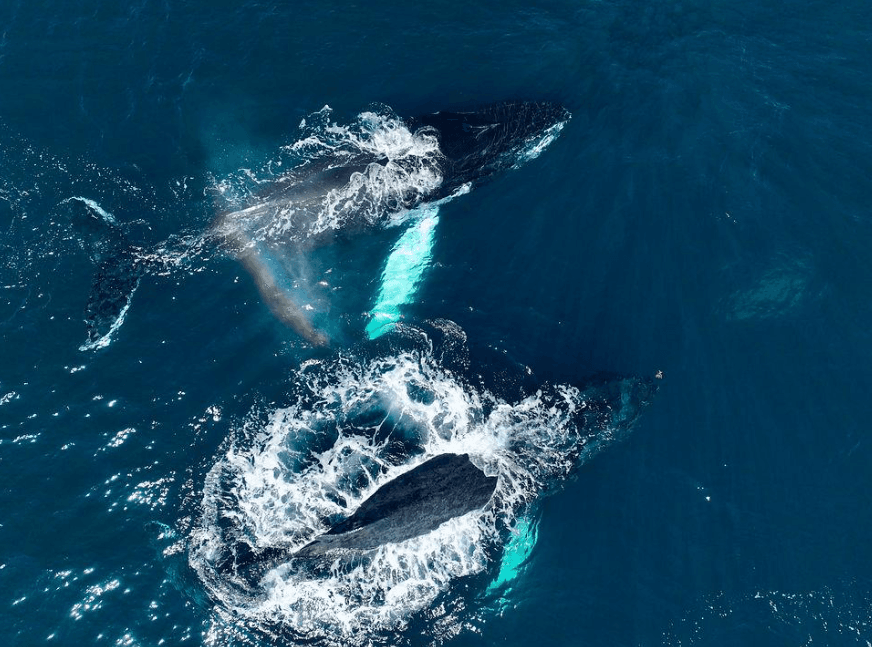
A humpback whale appearing at the ocean's surface can be an exciting sight. Sometimes, instead of simply rising to breathe and disappearing again, the whale rotates its body, exposing a different part of its back or underside before returning to a normal swimming position.
This movement may look like a complete roll. For visitors observing whales in Samaná Bay in the Dominican Republic, it raises an interesting question: why would such a large marine mammal rotate its body at the surface?
Humpback whales perform a variety of movements as they swim and interact with their surroundings. Rolling can occur in different circumstances, and its purpose is not always obvious from a short observation. The whale's position, nearby animals, and the movements that follow can help provide context.
Understanding this behavior can make a whale-watching trip more interesting without assuming that every movement has one definite explanation.
What Does It Mean When a Humpback Whale Rolls Over?
A rolling movement occurs when a whale rotates around its lengthwise body axis, changing which side faces upward. Depending on the movement, the whale may expose part of its side or underside before returning to its usual position.
Not every roll is a complete rotation. Some movements are brief and partial, while others involve a more noticeable change in body orientation.
From a boat, it may be difficult to see the full movement because waves can hide part of the whale's body. The animal may also rotate underwater before becoming visible again.
Rolling should be distinguished from a whale simply turning left or right while traveling. A turn changes the direction in which the whale moves; a roll changes the orientation of its body around its lengthwise axis.
Recognizing that difference helps observers describe what they see more accurately.
Why Do Humpback Whales Roll at the Surface?
There is no single explanation for every rolling event. The movement may be associated with different activities, and the surrounding behavior matters when interpreting it.
1. Adjusting Body Position
Whales need to control their orientation as they move through the water. A roll can change the position of the body and fins relative to the surrounding water.
However, it is not possible to conclude that a particular roll is simply a deliberate adjustment. Researchers need to consider the whale's overall movement and circumstances before interpreting its function.
For visitors, the practical takeaway is that rolling is one of several ways a whale can change its position during normal activity.
2. Interacting With Other Whales
Rolling may occur during periods of social interaction, especially when multiple whales are in the same area. Their movements can include changes in spacing, direction, and body orientation.
Nevertheless, a whale rolling near another whale does not automatically mean the animals are communicating through that movement or engaging in a particular social behavior.
To interpret the event, observers look for a broader sequence: whether the whales approach or separate, whether the behavior is repeated, and how the animals respond to each other.
This context is more informative than assigning a specific meaning to one roll.
3. Possible Contact With the Water or Surroundings
A whale's body is constantly moving through water, and changes in orientation may occur alongside other swimming movements. At the surface, rolling can expose different areas of the body to air and water.
It may be tempting to interpret such movement as scratching or rubbing, but that explanation should not be assumed without supporting evidence. A surface roll alone does not establish why the whale performed it.
The safest interpretation is to describe the observed movement first and consider possible explanations only when more evidence is available.
4. Part of a Larger Sequence of Activity
Sometimes, rolling is just one movement within a longer period of surface activity. A whale may roll, change direction, submerge, or reappear elsewhere.
When several actions happen close together, they can help observers understand the sequence. Even then, the exact purpose may remain uncertain.
Wild animals do not always display behavior that can be confidently interpreted by someone watching from above the water. Accepting that uncertainty is part of responsible wildlife observation.
Why Might a Whale Show Its Underside While Rolling?
A rolling whale may expose part of its belly or the underside of a pectoral fin. This can make the movement especially noticeable to people on a boat.
The underside is normally hidden when the whale is swimming in its usual orientation. As the body rotates, a different surface becomes visible for a short time.
Seeing the underside does not necessarily mean the whale is trying to attract attention. Nor does it automatically indicate that the animal is resting, playing, or responding to a nearby boat.
The movement may be brief, and the whale may return to its normal position immediately afterward. Observers should avoid interpreting a momentary glimpse as evidence of a particular emotional state or intention.
How Is Rolling Different From Swimming on One Side?
Rolling and swimming on one side are related in appearance, but they describe different things.
Rolling refers to the rotation itself. The whale changes its body orientation, potentially moving from one side toward its usual position or rotating farther around.
Swimming on one side describes a position the whale maintains while moving through the water. A whale can remain tilted or travel with one side facing upward for a period without completing a full roll.
This distinction matters when recording wildlife behavior. A brief rotation should not automatically be described as prolonged side swimming, and a whale maintaining a tilted position should not automatically be said to have rolled completely over.
Careful descriptions make it easier to compare observations and avoid confusing different movements.
Can You Observe Rolling Behavior in Samaná Bay?
Samaná is a well-known destination for seasonal humpback whale watching in the Dominican Republic. During the winter and early spring breeding season, visitors may see whales surfacing, traveling, interacting, or displaying other natural behaviors.
Rolling is a possible sighting, but it is not guaranteed on any particular trip. Whales choose their own movements, and their behavior varies with the animals present and the conditions at sea.
Visibility also matters. A whale may roll partly underwater, remain submerged, or surface at a distance where the movement is difficult to identify.
For this reason, visitors should approach whale watching as an opportunity to observe wild animals rather than as a search for a particular action.
Before booking, check the operator's current schedule, meeting point, tour duration, safety arrangements, and wildlife-viewing practices.
What Should Whale Watchers Look For?
If a whale appears to roll over, watch the overall sequence rather than focusing only on the moment when its body turns.
Notice whether the whale completes a rotation or returns to its previous position. Look for nearby whales and changes in the animals' spacing. Observe whether the whale continues traveling, submerges, or displays another movement afterward.
These details can help you describe the event without claiming to know its exact purpose.
A guide may be able to explain possible interpretations based on experience and the visible circumstances. However, responsible explanations should distinguish direct observations from theories about what the whale might be doing.
This approach makes the experience more educational and helps visitors appreciate the complexity of marine wildlife.
How to Observe Humpback Whales Responsibly
A whale rolling at the surface may attract attention from everyone aboard a boat. Even so, the crew should prioritize safe and responsible wildlife observation over getting closer for a photograph.
Follow the captain's instructions and choose operators that respect applicable whale-watching rules and maintain appropriate distances. Do not ask a boat to pursue a whale simply because it has displayed an interesting movement.
For photographers, a short burst of images may help document a quick roll, but taking pictures should never come before personal safety or the animal's welfare.
It is also important not to interpret every movement as a performance intended for humans. Whales are wild animals, and their behavior can be unpredictable.
Responsible observation gives visitors a chance to appreciate natural behavior while allowing whales to continue their activities with minimal disturbance.
Plan Your Samaná Whale-Watching Experience
Watching a humpback whale roll at the surface can offer a rare glimpse of how its body moves in the water. The movement may be partial or more complete, and the reason for it depends on the wider context.
Although rolling can occur during different activities, a single observation rarely reveals the whale's exact intention. Distinguishing a roll from a turn or prolonged side swimming can help visitors describe the behavior more precisely.
If you are planning a trip to the Dominican Republic during whale season, explore available Samaná whale-watching excursions and confirm current details directly with the tour operator.
Ready to discover humpback whales in Samaná Bay? Plan your seasonal visit, choose a responsible wildlife excursion, and enjoy observing these remarkable marine mammals in their natural environment.
Frequently Asked Questions
Why do humpback whales roll over in the water?
Rolling may occur during different types of swimming or social activity. The purpose cannot always be determined from the movement alone.
Does rolling mean a humpback whale is playing?
Not necessarily. Although rolling can look playful to human observers, appearance alone does not establish that the whale is playing.
Why does a rolling whale sometimes show its belly?
The underside becomes visible as the whale rotates its body. This does not, by itself, reveal why the whale rolled.
Is rolling the same as swimming on one side?
No. Rolling describes body rotation, while swimming on one side describes maintaining a tilted position as the whale moves through the water.
Can I see humpback whales rolling in Samaná Bay?
It is possible, but the behavior is not guaranteed during a whale-watching excursion. Sightings depend on the whales present and conditions on the day.
When is whale-watching season in Samaná?
The main season is generally during the winter and early spring, commonly January through March. Confirm current seasonal arrangements with a local operator before traveling.
Editorial note: This article describes observable whale movements and possible interpretations without claiming that rolling always has one purpose or guaranteeing that visitors will witness it.

Local explorer & expert guide in Los Haitises Park Tours.