Why Do Humpback Whales Change Swimming Speed in Samaná Bay?
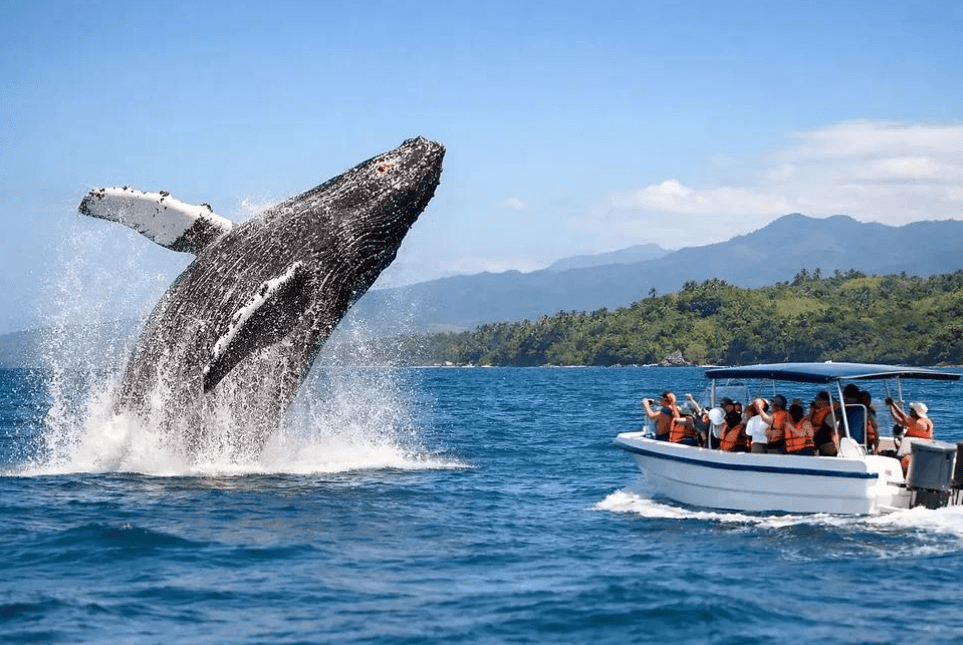
Watching a humpback whale move through the water can be an unforgettable part of a whale-watching trip in Samaná Bay, Dominican Republic. Sometimes a whale appears to glide slowly across the surface. At other times, it seems to move away quickly, change direction, or disappear beneath the water before resurfacing somewhere else.
These changes in pace are a natural part of whale movement. However, a whale’s swimming speed does not always reveal exactly what it is doing or why it has changed its behavior.
During the humpback whale season, visitors may observe different movement patterns while exploring the waters around Samaná. Understanding these changes can make the experience more rewarding and help travelers appreciate the animals without disturbing them.
In this guide, we explore why humpback whales may change swimming speed, what observers can look for, and how to interpret these movements responsibly during a whale-watching excursion.
Why Do Humpback Whales Change Their Swimming Speed?
Humpback whales do not maintain one constant swimming speed throughout every activity. Like other large marine mammals, they adjust their movement according to their surroundings, activity, and immediate circumstances.
A whale may travel steadily for a period, slow down near the surface, or accelerate as it changes direction. These differences can be difficult to interpret from a boat because observers usually see only a small portion of the whale’s underwater activity.
Several factors may contribute to changes in swimming speed.
1. Traveling Through the Bay
A humpback whale may maintain a relatively steady pace when moving from one area to another. During these periods, its back or dorsal fin may appear at the surface before the animal gradually moves beyond view.
Traveling whales can change direction or pace as they move through the bay. Their route may not be obvious to people watching from above, especially when the whale spends much of its time underwater.
For visitors, the most useful observation is whether the whale continues moving along a consistent path or begins showing a different pattern.
2. Moving Around Other Whales
Samaná Bay is known for seasonal humpback whale activity, including encounters involving mothers and calves and groups of whales. When more than one whale is present, their movements may become more complicated to observe.
A whale might change speed while approaching, moving alongside, or separating from another whale. However, the reason for a particular movement cannot reliably be determined from speed alone.
Look for the broader pattern: Are two whales moving in the same direction Does one surface farther away Does the group appear to spread out or change its course?
These details provide more context than simply deciding that a whale is swimming fast or slowly.
3. Changing Direction
A whale changing direction may appear to speed up or slow down, even when its overall movement is difficult to judge from the boat.
For example, a whale may turn away from the observer’s line of sight and become less visible. It might then surface at a different location, creating the impression that it has suddenly moved much faster.
Changes in direction and visibility can make underwater movement difficult to estimate. Observers should avoid assuming that every unexpected surfacing means the whale has accelerated.
4. Responding to Its Immediate Environment
Marine animals move through an environment that is constantly changing. Water movement, the presence of other animals, and the whale’s own activity may all be relevant to its movement.
However, it is not always possible to identify which environmental factor influenced a particular speed change. Wind and waves can also affect the viewing conditions from a whale-watching boat, making the animal’s pace harder to judge.
A careful observer distinguishes between what is visible and what remains uncertain.
Why Do Some Whales Appear to Swim Slowly?
A humpback whale moving slowly near the surface may provide excellent opportunities for observation. Its back may remain visible for longer, and the animal may be easier to follow between surfacings.
Still, slow movement does not necessarily mean that a whale is resting, relaxed, or uninterested in its surroundings.
It may be moving along a particular route, changing direction, or engaging in an activity that cannot be identified from the surface alone. A whale may also appear slow because the boat and animal are moving in similar directions.
During a tour, watch the whale’s movement over several surfacings rather than drawing conclusions from one brief appearance.
Why Can a Humpback Whale Suddenly Seem to Move Faster?
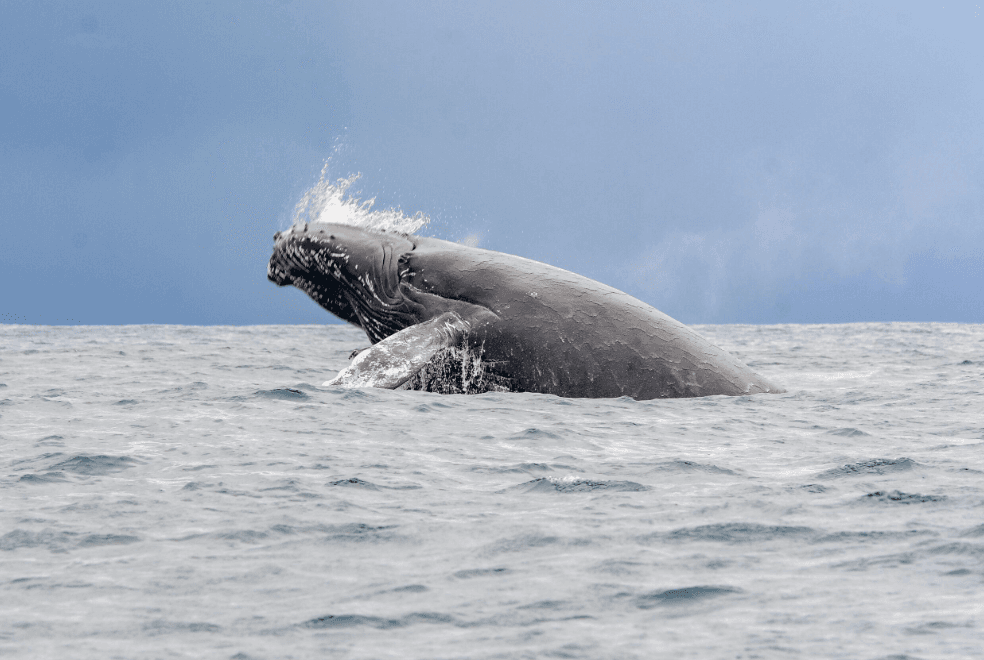
A whale can appear to accelerate when it changes course, travels away from the boat, or remains underwater for a period before surfacing at a distance.
The viewing angle matters. A whale moving across the observer’s field of view may seem easier to follow than one moving directly away. Surface waves and the distance between the boat and whale can also influence perception.
There is another important point: a whale’s disappearance does not mean it has necessarily increased its speed. It may simply have submerged.
When a whale surfaces again, note its position relative to the last sighting. Over time, these observations can help you recognize whether its direction or apparent pace has changed.
How Does a Whale’s Body Help It Change Speed?
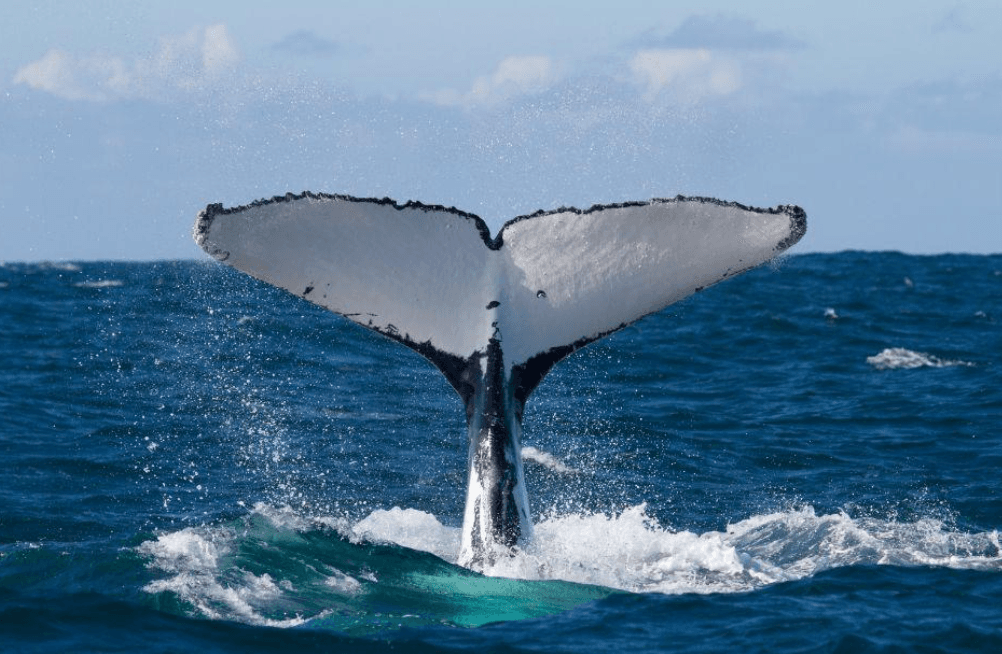
Humpback whales have powerful bodies adapted for swimming. Their large tails, known as flukes, provide propulsion, while their long pectoral fins help with maneuvering and control.
By changing the movement of its tail and adjusting its body position, a whale can alter its motion through the water. Its pectoral fins also play a role in controlling direction and movement.
These features help explain how a humpback whale can change its pace, but they do not reveal the specific reason behind every observed speed change.
For example, a whale moving more quickly is not automatically fleeing, and a slower whale is not necessarily resting. Interpreting its behavior requires more evidence than speed alone.
Do Mothers and Calves Swim at Different Speeds?
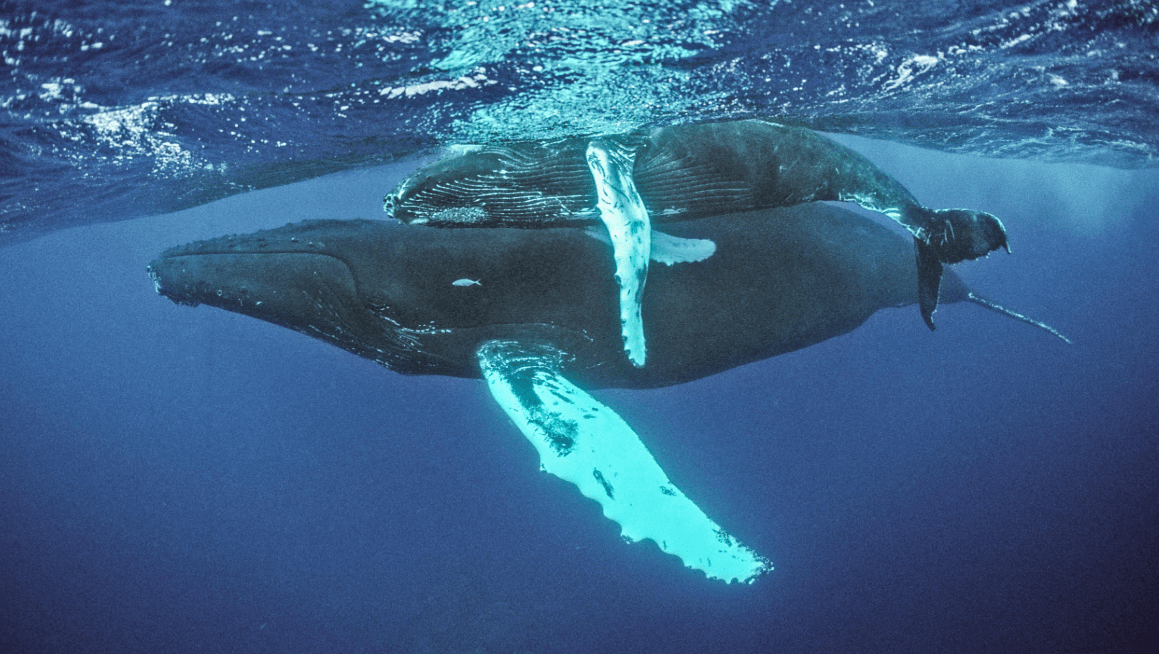
Mother-calf pairs can be especially interesting to observe during the whale-watching season in Samaná Bay. Calves are smaller than adult whales, and their movements may look different as they travel near their mothers.
A mother and calf may not appear perfectly synchronized at every moment. Their positions can change as they surface, submerge, or move through the water.
However, an observer should not assume that every difference in pace indicates a problem or that a calf is struggling. Brief observations from a boat rarely provide enough information to assess the condition of an animal.
If a guide points out a mother-calf pair, watch how their positions change over time and follow the guide’s instructions about maintaining a respectful distance.
Can Tourists Estimate a Whale’s Swimming Speed?
Estimating a whale’s exact speed from a moving boat is difficult. Visitors usually lack a fixed reference point, and the boat may be moving at the same time as the whale.
Instead of attempting to calculate an exact speed, focus on a few simple observations:
- Direction: Is the whale continuing in the same direction or changing course?
- Surface intervals: How long does it remain out of sight before appearing again?
- Relative position: Does it surface close to its previous location or noticeably farther away?
- Movement pattern: Does its pace appear consistent across several sightings?
- Other whales: Is it moving alone or in the presence of other whales?
These observations can help you describe what happened without making unsupported claims about the animal’s intention.
If your guide offers an interpretation, consider it alongside the visible evidence. Experienced guides may use the broader situation to explain what visitors are seeing, but some behaviors remain uncertain even to knowledgeable observers.
What Should You Do When a Whale Changes Speed During a Tour?
A change in swimming speed can make an encounter feel exciting, especially when a whale disappears and resurfaces somewhere unexpected. The best response is to remain attentive and allow the crew to manage the boat.
Here are practical ways to enjoy the moment responsibly:
- Follow the guide’s instructions. The crew is responsible for managing the encounter and operating the boat safely.
- Avoid trying to chase the whale. Do not pressure the operator to speed up or pursue the animal when it changes direction.
- Observe the full pattern. Look at several surfacings rather than interpreting one movement in isolation.
- Use your camera thoughtfully. Keep watching with your eyes instead of spending the entire encounter looking through a screen.
- Respect the animal’s space. Follow local rules and the operator’s wildlife-viewing guidelines.
Responsible whale watching gives visitors an opportunity to learn while helping reduce unnecessary disturbance.
Is Faster Swimming a Sign That a Whale Is Disturbed?
Not necessarily. A whale may swim faster for many reasons, and speed alone is not a reliable indicator of distress.
To understand a possible response to a boat or another disturbance, observers would need to consider the wider context, including the whale’s behavior before and after the change and the circumstances of the encounter.
Even then, a single observation may not establish a clear cause. This is one reason responsible whale-watching operators emphasize appropriate distances and careful boat handling rather than relying on assumptions about what a whale is feeling.
If a whale changes pace or moves away, the appropriate response is to let the trained crew manage the encounter in accordance with local guidance.
Frequently Asked Questions
Do humpback whales swim at a constant speed?
No. Their movement can vary according to their activity and surroundings. They may travel at different paces, change direction, or submerge for periods.
Why did a whale suddenly disappear during my Samaná whale-watching tour?
It may have submerged or changed direction. Its disappearance does not automatically mean it was swimming faster or avoiding the boat.
Does a fast-swimming humpback whale mean it is frightened?
Not necessarily. Speed alone cannot establish whether a whale is frightened, disturbed, or responding to a particular event.
Can I tell how fast a whale is swimming from a boat?
You can make general observations about its apparent pace, but estimating exact speed is difficult when both the whale and boat may be moving and there are no fixed reference points.
Are humpback whales slower when traveling with calves?
Movement can vary between individuals and situations. A mother and calf may appear to move at different paces, but brief surface observations are not enough to establish a general rule about their relative speeds.
What is the best way to observe changes in swimming speed?
Watch the whale across several surfacings. Pay attention to its direction, relative position, and movement pattern, and ask your guide to explain what can reasonably be inferred.
Final Thoughts
Changes in swimming speed are one of the many details that make humpback whale watching in Samaná Bay fascinating. A whale may appear to glide slowly, move steadily across the water, or seem to accelerate before disappearing beneath the surface.
These changes offer opportunities to observe how a large marine mammal moves through its environment, but they do not always reveal why it is behaving in a particular way.
During your Samaná whale-watching experience, focus on the observable details, listen to your guide, and give the whales room to move naturally. Patient observation and responsible viewing can make the encounter more meaningful without turning every movement into a definite explanation.
Whether you see a whale moving calmly across the bay or surfacing at a surprising distance, remember that there is often more happening beneath the water than you can see from the boat.

Local explorer & expert guide in Los Haitises Park Tours.