Why Do Humpback Whales Have Such Long Pectoral Fins?
Humpback whales have one of the most recognizable silhouettes in the ocean. Their broad bodies, knobbly heads, and long pectoral fins make them different from many other large whale species.
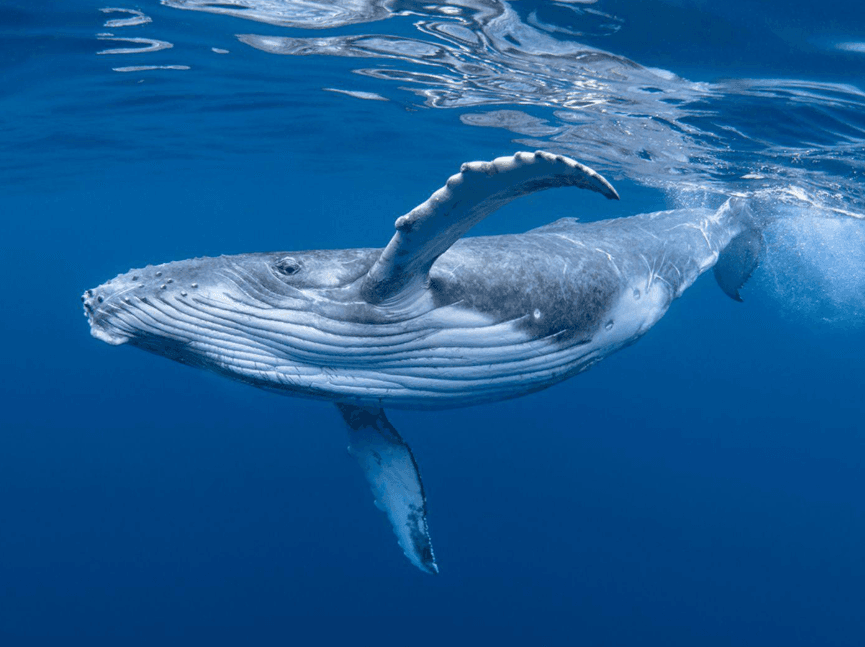
These exceptionally long flippers are more than a striking feature. They help humpback whales control their movement through the water and contribute to their ability to maneuver during a range of activities.
For visitors planning a whale-watching trip to Samaná Bay in the Dominican Republic, understanding the function of these fins makes sightings even more interesting. A humpback whale lifting a flipper above the surface or turning beneath the water may reveal a little about how its body is adapted to life in the ocean.
So why are humpback whale pectoral fins so long, and what makes them different from the flippers of other whales?
How Long Are Humpback Whale Pectoral Fins?
Humpback whales are famous for having exceptionally long pectoral fins relative to their body size. Their flippers can reach roughly one-third of their body length, although measurements vary among individuals.
These fins extend from the sides of the body and contain bones corresponding to the forelimbs of other mammals. Their internal structure includes familiar skeletal elements, modified to function as broad, flexible appendages in water.
The flippers are not rigid paddles. They have joints, muscles, and connective tissues that allow controlled movement, while their overall shape helps influence how water flows around them.
Their unusual length is one of the characteristics that makes humpback whales relatively easy to distinguish from several other whale species when a clear view is available.
What Do Humpback Whale Pectoral Fins Do?
Pectoral fins help humpback whales influence their direction and body position in the water. Their role is different from that of the tail flukes, which provide the main source of propulsion during swimming.
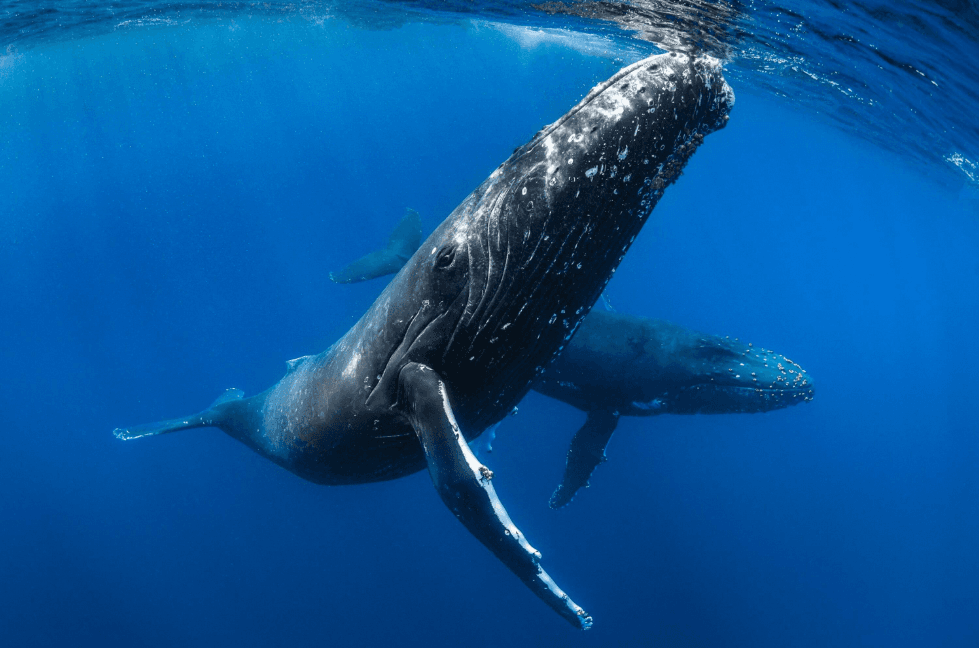
A humpback whale uses coordinated body and tail movements to move forward. Its pectoral fins help control turning, balance, and maneuverability.
The fins can also influence the whale's stability as it changes orientation. By adjusting their position, whales can affect the forces acting on their bodies as they move through the water.
The exact contribution of the fins depends on the whale's speed, body position, and activity. Their function is not limited to one movement or one type of behavior.
How Do Long Flippers Help Humpback Whales Turn?
Turning a massive body in water requires more than simply pointing in a new direction. The whale must manage its momentum and control how water flows around its body.
Pectoral fins contribute to this process by changing the forces acting on either side of the whale. Adjusting a fin's angle or position can help the animal influence its orientation and maneuver through the water.
Humpback whales may use these movements while changing direction, approaching other whales, or adjusting their position during different activities.
Their long fins provide a large surface area that can influence water flow. However, turning is a coordinated action involving the entire body, not just the flippers.
For whale watchers, this helps explain why a humpback whale can appear to change orientation smoothly despite its enormous size.
How Are Pectoral Fins Different From Tail Flukes?
Humpback whales have two main types of external structures that are easy to confuse when discussing movement: pectoral fins and tail flukes.
Pectoral fins are the paired appendages on the sides of the body. They help with maneuverability, directional control, and stability.
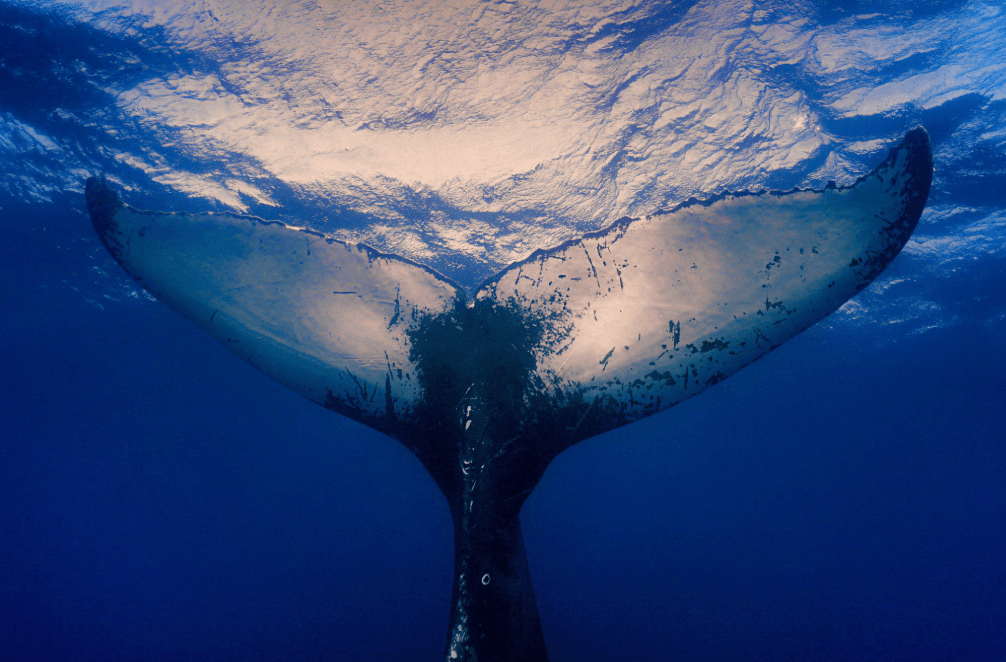
Tail flukes are the broad horizontal lobes at the end of the tail. Up-and-down movements of the tail generate much of the force that propels the whale forward.
Both structures are important, but their main functions differ. The tail supplies propulsion, while the pectoral fins help control how the whale moves through the water.
Understanding this difference makes it easier to interpret whale movements during an excursion. A visible tail movement and a raised pectoral fin do not necessarily indicate the same activity.
Why Are Humpback Whale Flippers Different From Those of Many Other Whales?
Humpback whales belong to the rorqual family, which also includes blue whales, fin whales, and minke whales. Although these species share several anatomical features, their body proportions differ.
Humpback whales are especially notable for their long pectoral fins. Many other large whales have relatively shorter flippers in proportion to their bodies.
The shape and proportions of a whale's fins influence how it moves through the water. Different species have evolved body designs suited to their feeding strategies, swimming patterns, and ecological roles.
It would be inaccurate to say that long fins make humpback whales universally faster or more efficient than other whales. Instead, their distinctive anatomy contributes to a particular combination of movement and control.
Do Humpback Whales Use Their Fins to Feed?
Yes, pectoral fins can be involved in some humpback whale feeding behaviors.
In certain feeding situations, humpback whales use coordinated body movements and fin positions while approaching or manipulating prey. Some populations have been documented using bubble-related feeding techniques, and the whale's fins may contribute to body positioning during these activities.
However, the fins are not the structures responsible for filtering food. That task is performed by baleen plates, which retain prey while water exits the mouth.
The long fins, expandable throat region, mouth, and baleen work as parts of a broader anatomical system, but each has a different role.
Humpback whales generally feed much less in their tropical and subtropical breeding areas than in their colder-water feeding grounds. Visitors to Samaná should therefore not expect to see specialized feeding behaviors on every trip.
Can Humpback Whales Lift Their Pectoral Fins Above Water?
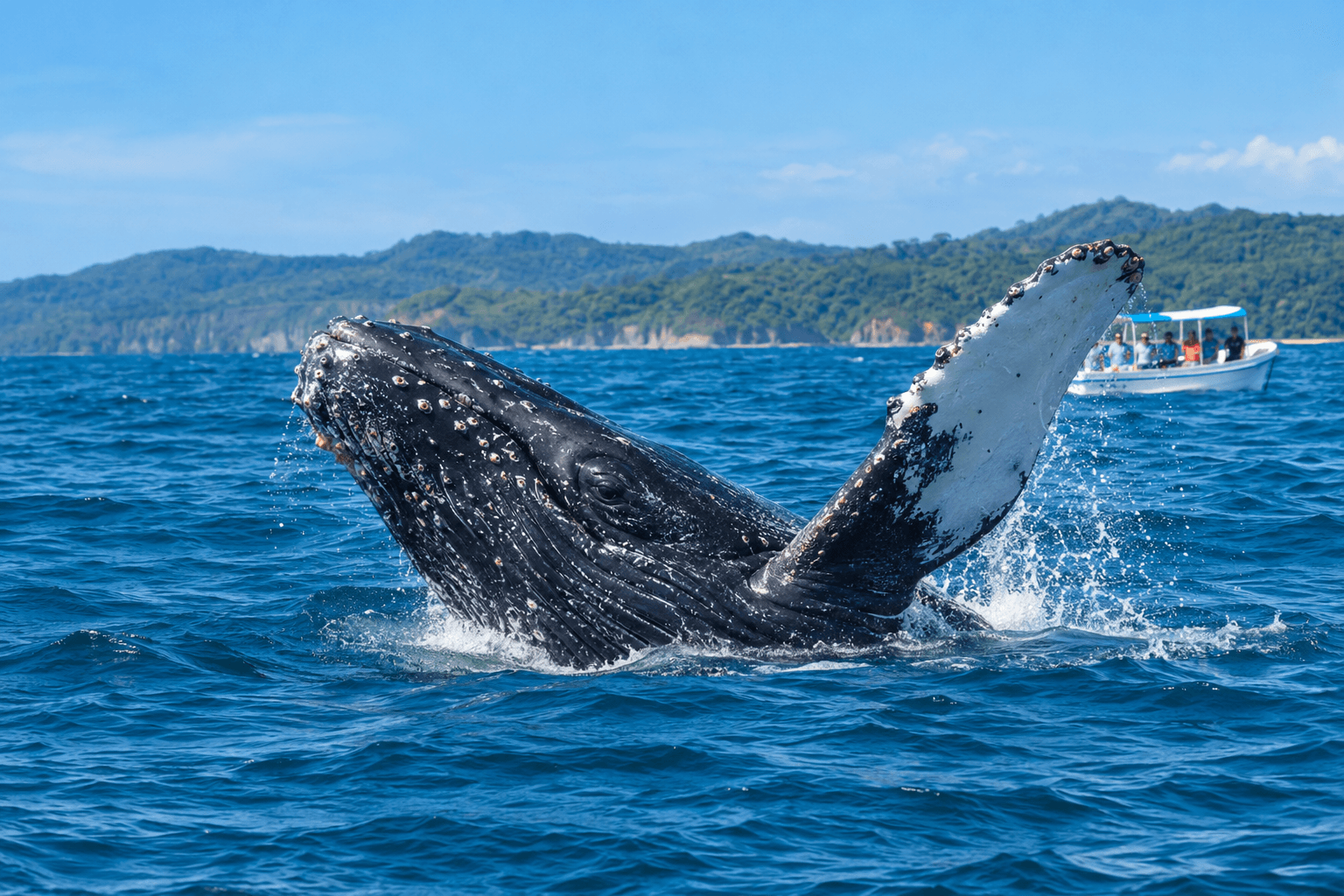
Yes. Humpback whales sometimes raise a pectoral fin above the surface. This behavior can be especially striking because the fins are so long.
A whale may also slap a fin against the water, creating a splash that can be visible from a distance. Researchers and observers have documented these surface behaviors, but the purpose of a particular movement is not always clear.
Depending on the context, fin movements may be associated with social interactions or other activities. It is important not to assign a single meaning to every fin lift or slap.
For example, a raised fin does not automatically mean that the whale is greeting people, asking for attention, or communicating a specific message to a nearby boat.
During whale watching, the most reliable approach is to describe what the whale actually does and avoid claiming certainty about its motivation.
Why Are Humpback Whale Pectoral Fins So Recognizable?
Their unusual length is the most obvious reason. When a humpback whale extends a fin near the surface, the appendage can appear remarkably large compared with the surrounding water.
The fins may be visible when the whale rolls, turns, or raises part of its body. In some encounters, a fin appears briefly before disappearing beneath the surface again.
Their shape also helps distinguish humpback whales from other large marine mammals. Still, identifying a whale should ideally involve several characteristics, including body shape, head features, dorsal fin, and tail markings when visible.
A single photograph may not show enough detail for a confident identification, especially when the animal is partly submerged or the water conditions are challenging.
Can You See Humpback Whale Flippers in Samaná Bay?
Samaná Bay is a well-known seasonal destination for humpback whale watching in the Dominican Republic. During the winter breeding season, visitors may encounter whales displaying a variety of natural surface behaviors.
Depending on conditions, a whale may turn near the surface, raise a pectoral fin, or slap a fin against the water. However, these behaviors are not guaranteed, and many sightings provide only a brief view of the animal.
The chance of seeing a particular movement depends on the whales' natural activity and the circumstances of the encounter. No responsible operator can guarantee a pectoral-fin display on a specific trip.
Even when a whale does not lift its flippers above the surface, observing its body position and movement can help visitors appreciate its size and anatomy.
How Can You Photograph Humpback Whale Flippers Responsibly?
Long pectoral fins can make compelling subjects for wildlife photography, but getting a good photograph should never take priority over the whale's welfare.
Use the camera or zoom available to you rather than asking a boat operator to approach too closely. Follow the crew's instructions and respect applicable wildlife-viewing rules.
A few practical tips can help:
- Keep your camera ready while maintaining awareness of the crew's instructions.
- Use a suitable shutter speed to capture movement when lighting allows.
- Include some surrounding water to show the scale of the fin.
- Avoid assuming that a raised fin has a particular social meaning.
- Never pressure the captain to chase or surround a whale for a better photograph.
- Accept that the whale may submerge before you capture the image you hoped for.
A natural, respectful encounter is more important than a perfectly framed photograph.
What Should You Know Before Booking a Whale-Watching Tour in Samaná?
If you are planning to observe humpback whales, choose a tour based on more than the possibility of seeing dramatic fin movements.
Check the departure location, duration, inclusions, safety information, and wildlife-viewing practices before booking. If you have questions about the excursion, contact the operator directly and confirm the details before making payment.
Ask whether the crew follows applicable local regulations and how it handles encounters when whales change direction or move away.
Remember that humpback whales are wild animals. A trip may provide an excellent opportunity to learn about their anatomy and behavior, but it cannot guarantee a particular display.
Choosing a responsible operator helps make wildlife viewing safer and more respectful of the animals.
Final Thoughts
Humpback whales have exceptionally long pectoral fins that contribute to maneuverability, directional control, and stability in the water. These fins work alongside the tail flukes, which provide much of the force needed for forward swimming.
Their unusual proportions are a distinctive feature of the species and offer a useful way to understand how whale anatomy relates to movement.
During a whale-watching excursion in Samaná Bay, you may see a humpback whale raise, extend, or slap a pectoral fin. If you do, remember that the movement's exact purpose may not be obvious from a brief observation.
Planning a Samaná whale-watching trip? Explore available excursions, verify current departure and tour details with the operator, and choose a wildlife experience that respects the whales and their natural behavior.
Editorial note: Verify scientific claims and current local tour information before publication. Do not promise sightings of specific whale behaviors.

Local explorer & expert guide in Los Haitises Park Tours.