Why Do Humpback Whales Raise Their Tails Without Diving?
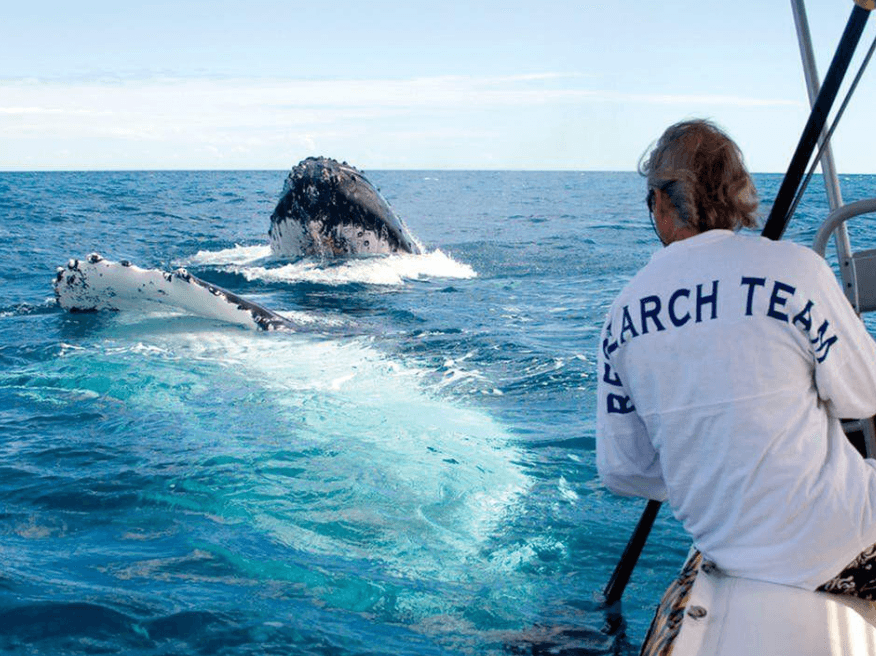
Watching a humpback whale in Samaná Bay can be full of surprises. One moment, the whale may be swimming near the surface; the next, its broad tail flukes appear above the water. You might expect the animal to disappear into the depths, but instead, it lowers its tail, changes position, or surfaces again nearby.
Why would a humpback whale raise its tail without immediately making a deep dive?
The answer depends on the movement itself and what happens afterward. A raised tail can be associated with several body positions and activities, and it does not always mean that a long dive is about to begin.
For visitors planning a whale-watching excursion in the Dominican Republic, understanding these differences makes it easier to observe whale behavior without assuming that every tail movement has the same purpose.
What Does It Mean When a Whale Raises Its Tail?
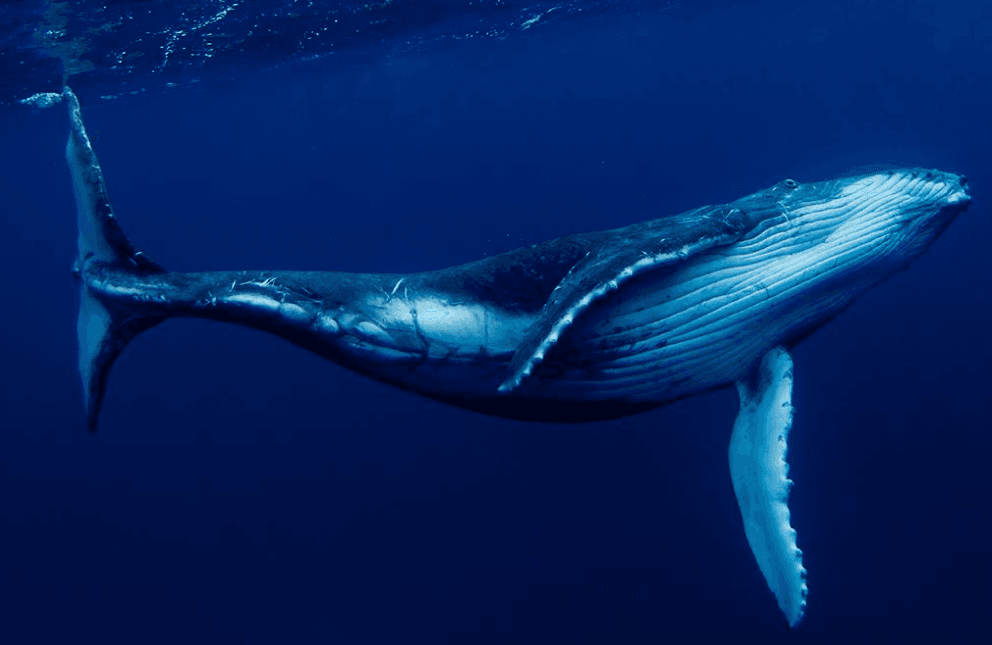
A humpback whale's tail, known as the flukes, consists of two broad lobes separated by a central notch. The flukes provide propulsion and help the whale move through the water.
When a whale lifts its tail above the surface, the movement may be brief or may form part of a larger body movement. Depending on its orientation, the whale might expose the full tail, show only part of the flukes, or lower the tail before a conspicuous dive occurs.
The key distinction is between seeing the tail rise and knowing what the whale intends to do next. The first is an observable event; the second is an interpretation.
A whale may change its body angle, move through a wave, or adjust its position near the surface. A tail lift alone does not establish whether the animal will dive deeply, remain near the surface, or change direction.
1. The Whale May Be Adjusting Its Body Position
Humpback whales do not move through the ocean in a perfectly straight, rigid posture. Their bodies bend and change orientation as they swim.
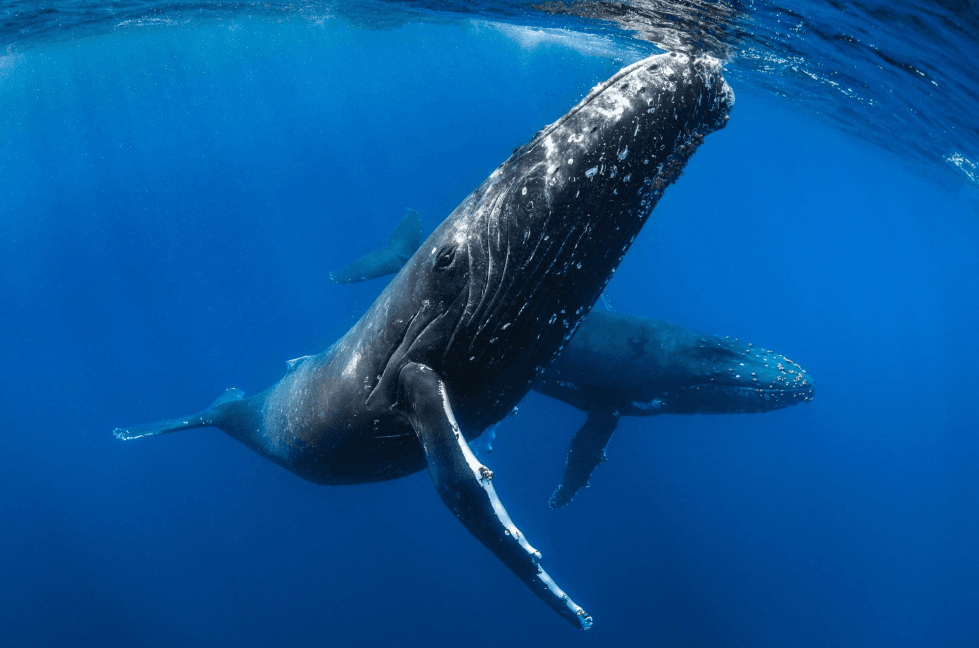
A tail may become visible when a whale arches its back, adjusts its swimming angle, or changes its position in the water. Depending on the movement, the flukes can rise briefly and then disappear again without a clearly visible deep dive.
This is one reason whale watchers should pay attention to the entire body rather than only the tail.
Look for changes in the whale's back, the angle of its body, and the direction in which it is moving. If the animal continues swimming near the surface after lowering its tail, that sequence tells you more than the initial lift alone.
2. The Whale May Be Making a Shallow Movement
Not every movement below the surface is a deep dive. A humpback whale can descend briefly, change its position, and return to the surface without remaining underwater for a long period.
During such movements, parts of the body may become visible at different moments. A raised tail does not necessarily indicate that the whale is beginning an extended descent.
From a boat, it can be difficult to determine exactly how deep the animal has gone. Water clarity, wave conditions, sunlight, and the whale's distance all affect what observers can see.
If the whale surfaces again relatively soon, avoid assuming that the earlier tail lift was a failed dive. It may simply have been part of a shorter movement sequence.
3. The Tail May Appear During a Change of Direction
Humpback whales can maneuver in different directions while swimming. Changes in body orientation may alter which parts of the animal are visible above the surface.
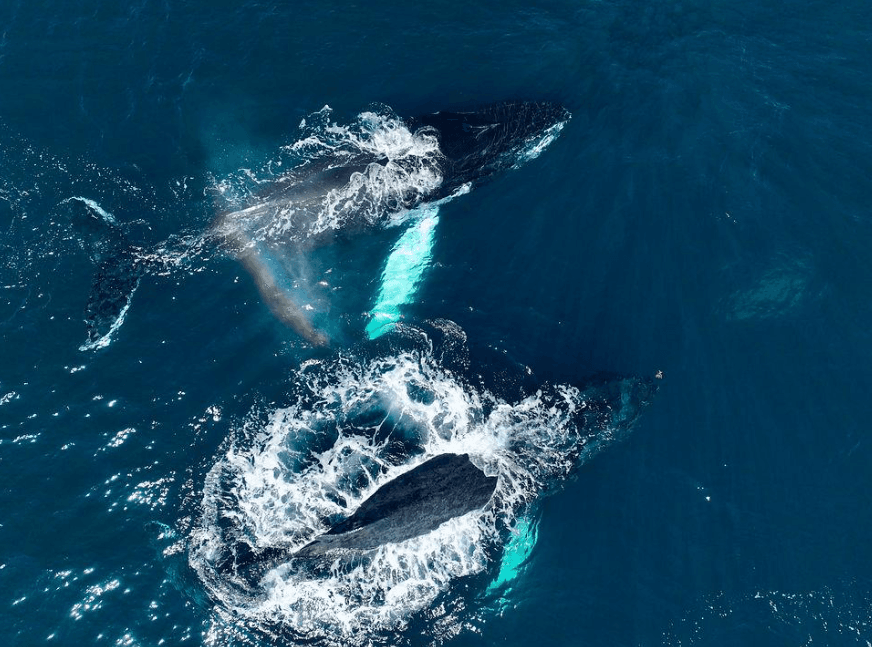
If a whale changes direction, its back, tail, or other body features may briefly emerge at an unexpected angle. The tail can appear raised even when the animal is not performing a clearly defined diving sequence.
This is particularly important when observing whales from a moving boat. The viewing angle may change at the same time as the whale's position, making a simple movement look more dramatic or purposeful than it really is.
Instead of immediately labeling the action, watch where the whale travels next. Does it continue in a new direction Does it remain in the same general area Does it surface to breathe?
These observations can help describe the movement more accurately.
4. Water Conditions Can Change How the Tail Looks
The sea's surface can make whale behavior difficult to interpret. Waves, swell, reflections, and changing light can hide part of an animal or make a small movement appear larger.
A whale swimming just below the surface may have its body partially obscured. A passing wave can also affect how much of the back or tail appears visible to someone on a boat.
This means that not every apparent tail lift represents a distinct behavior. Sometimes, the observer's view is incomplete.
In Samaná Bay, as in other whale-watching locations, the quality of a sighting depends partly on the sea conditions and the position of the boat. A clear view of the animal's whole movement is more informative than a single glimpse of the flukes.
5. Does a Raised Tail Mean the Whale Is Preparing to Feed?
A raised tail alone is not reliable evidence that a humpback whale is feeding.
Humpback whales use different movement patterns in different circumstances, and their feeding behavior cannot be identified confidently from one body position without supporting context. Feeding may involve other observable actions, but the details depend on the behavior and the environment.
Samaná Bay is widely known for seasonal humpback whale activity associated with migration and reproduction. Visitors should not automatically interpret a tail lift there as a feeding event.
If you are interested in whale feeding, it is better to learn about the species' feeding ecology separately and avoid drawing conclusions from a brief surface sighting.
6. How Is a Tail Lift Different From a Fluke-Up Dive?
A fluke-up dive is a recognizable movement in which a whale raises its tail flukes high above the surface as it descends. The underside of the tail may be visible before the animal disappears underwater.
A simple tail lift may be less pronounced, may not involve a full descent, or may be followed by continued surface activity.
These descriptions refer to visible movement patterns, not necessarily different motivations. The same body part can appear in different ways depending on the whale's posture and activity.
For whale watchers, it helps to describe exactly what happened:
- Did the entire tail rise above the water?
- Was only part of the flukes visible?
- Did the whale disappear immediately afterward?
- Did it return to the surface soon after?
- Did its direction change?
Recording these details helps distinguish an observation from an assumption about the whale's next action.
7. Can Researchers Learn From These Tail Movements?
Researchers study whale behavior by collecting observations across multiple encounters and considering the surrounding circumstances. Video recordings, photographs, and field notes can help document how whales move and how often particular actions occur.
A tail lift may be useful information when it is recorded as part of a larger sequence. Researchers can consider body posture, direction, duration, nearby animals, and subsequent movements when interpreting an observation.
However, a single tail movement rarely provides enough information to establish a whale's intention. Repeated observations and appropriate scientific methods are needed to investigate patterns reliably.
Visitors can follow the same basic principle: describe the behavior you witnessed, but remain cautious about explaining why it occurred.
8. What Should Whale Watchers Observe After a Tail Lift?
The moment after a tail lift may be just as interesting as the lift itself. Instead of turning away once the tail disappears, keep watching the general area where the whale was last visible.
You may notice the animal surfacing to breathe, moving in a different direction, remaining below the surface, or appearing at a distance.
Useful details to observe include:
The next surfacing: Did the whale reappear soon, or did it remain underwater for longer?
The direction of travel: Did it appear to continue on the same path or change course?
The body posture: Was the back arched, and how much of the tail was visible?
The conditions: Were waves or reflections making the movement difficult to see?
Nearby whales: Were other animals visible in the same area?
These details make the encounter more informative. They also help visitors appreciate that whale watching involves observing a sequence of natural events rather than waiting for one predictable display.
9. Can You Photograph a Tail Lift Without Missing the Next Movement?
Yes, although timing can be challenging. A tail may become visible for only a short period, and the next movement can occur quickly.
If you want to photograph a tail lift, keep the whale within your field of view rather than focusing exclusively on the exact moment the flukes rise. A slightly wider frame may capture the body position and the surrounding water, providing more context for the photograph.
If your camera supports continuous shooting, it may help you record a short sequence. In changing light, use settings appropriate to the conditions and avoid letting the equipment distract you from safe observation.
Always follow the crew's instructions and photograph from an appropriate position on the boat. Never ask an operator to chase a whale or approach too closely for a better angle.
A photograph does not need to show a dramatic fluke-up dive to be useful. A clear record of a naturally occurring movement can be valuable for personal memories and wildlife education.
10. When Can You Watch Humpback Whales in Samaná Bay?
Samaná Bay in the Dominican Republic is known for seasonal visits by humpback whales. Whale-watching trips are commonly associated with the winter and early-spring period, although the timing of individual sightings and the conditions at sea can vary.
Even during the seasonal period, the whales determine what visitors will see. Some encounters may involve repeated surfacing, while others may include brief views of backs or tails before the animals disappear underwater.
No particular tail movement is guaranteed during a tour. A responsible excursion should focus on observing wildlife appropriately rather than promising that a whale will perform a specific action.
Before booking, review current seasonal information and check the details of the tour, including its meeting arrangements and applicable wildlife-viewing guidance.
How to Watch Whale Behavior Responsibly
When a humpback whale raises its tail, give it space to continue moving naturally. Avoid encouraging a boat operator to follow the animal aggressively or to maneuver unsafely for a closer photograph.
Responsible whale watching involves following local regulations, listening to the crew, and avoiding actions intended to provoke a response.
Remember these basic principles:
- Observe from the distance required by applicable rules and your guide.
- Do not attempt to touch, feed, or attract the whale.
- Keep a safe position on the boat while watching or photographing.
- Avoid interpreting a single movement as a definite sign of the whale's intention.
- Allow the whale to change direction or leave the area without pursuit.
Respectful observation protects the wildlife experience and allows visitors to enjoy natural behavior without unnecessary interference.
Frequently Asked Questions
Why does a humpback whale raise its tail without diving?
A tail lift may occur during a change in body position, a short underwater movement, or another swimming sequence. The tail's appearance alone does not reveal the whale's precise intention.
Does a raised tail always mean a deep dive is coming?
No. A raised tail can be followed by different movements. Observers should look at what happens next before describing the event as a deep dive.
What is the difference between a tail lift and a fluke-up dive?
A fluke-up dive involves the tail flukes rising as the whale descends underwater. A more limited tail lift may occur without a clearly visible deep descent.
Can waves make a whale's tail look as though it is lifting?
Yes. Waves, reflections, and viewing angles can affect how much of the whale is visible and how its movements appear from a boat.
Can you predict when a humpback whale will raise its tail?
Not reliably from one movement alone. Whale behavior is variable, and no specific tail display can be guaranteed during a sighting.
Is Samaná Bay a good place to observe humpback whales?
Samaná Bay is a well-known seasonal whale-watching destination in the Dominican Republic. Sightings and specific behaviors vary with conditions, timing, and the whales' natural activity.
Plan Your Samaná Whale-Watching Trip
A humpback whale lifting its tail without immediately diving can be a fascinating reminder that the animal's movements do not always follow a predictable sequence. By observing the whale's body position, direction, and next surfacing, visitors can learn more while avoiding unsupported assumptions.
If you are planning a trip to the Dominican Republic, explore available Samaná whale-watching excursions and verify the current tour details before booking. Choose a responsible operator that prioritizes wildlife welfare and provides clear information for visitors.
Suggested call to action: Explore Samaná whale-watching tours and experience the seasonal presence of humpback whales in the Dominican Republic.
Final Takeaway
A humpback whale raising its tail does not always mean a deep dive is about to happen. The movement may be part of a change in posture, a short underwater sequence, or another natural activity. The best way to understand what you see is to observe the complete sequence, describe it accurately, and give the whale space to move freely.

Local explorer & expert guide in Los Haitises Park Tours.